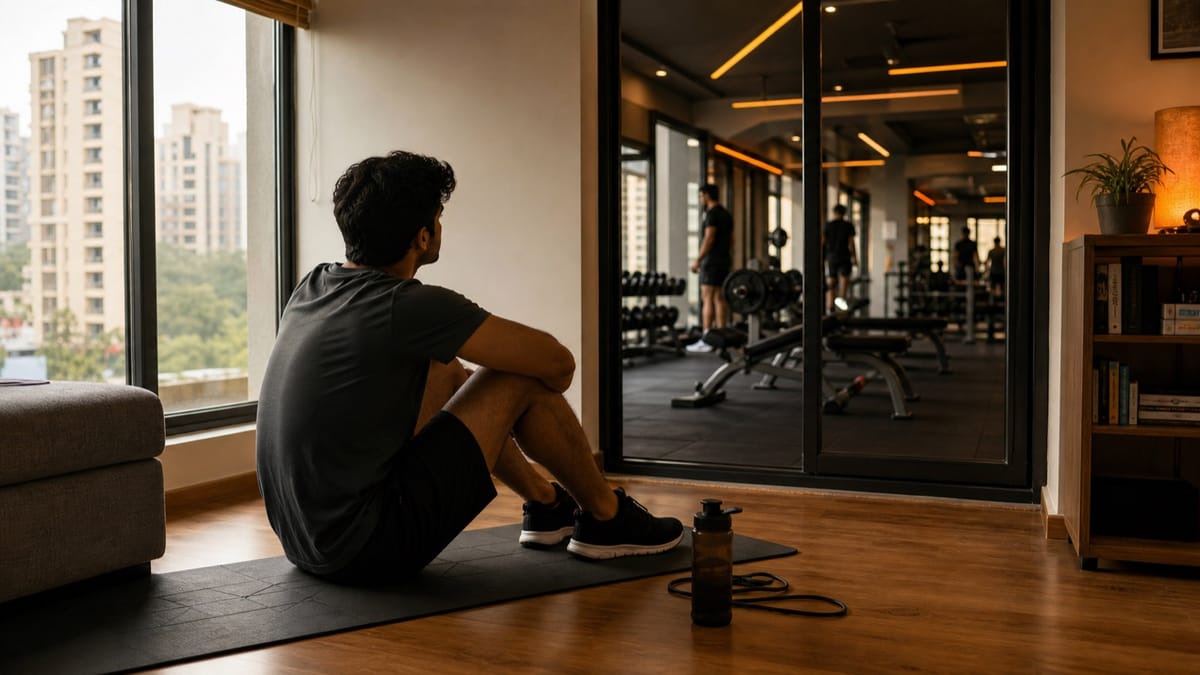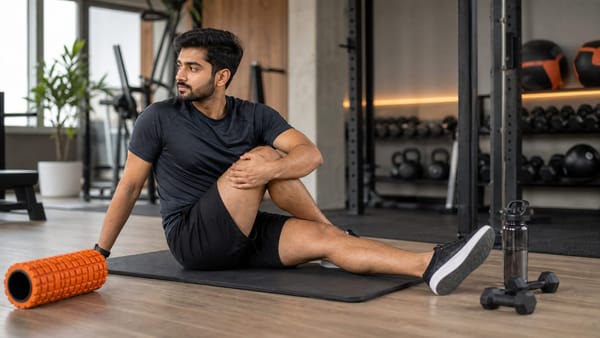
Should You Join a Gym Near You or Start at Home First?
A practical beginner guide to deciding whether your fitness journey should start at home or with a nearby gym.
Short answer: Start at home if the only goal is to build the habit of moving for 15-30 minutes. Join a nearby gym when you need equipment, a change of environment, a stronger routine trigger, or flexible access that makes workouts easier to repeat.
The first fitness decision is rarely about dumbbells or treadmills. It is about friction. If the plan feels heavy before the first workout, the plan usually fails. That is why the right answer depends less on motivation and more on what will make the next workout easier to start.
Home workouts are useful for removing embarrassment, travel time and cost. A nearby gym is useful when the home environment keeps pulling you back into work, chores or phone time. The best choice is the one that turns exercise into a repeatable slot in your week.
Quick decision checklist
- Choose home first if you need a low-pressure start and can train without distractions.
- Choose a gym if equipment, space, coaching or routine separation will help you stay consistent.
- Pick the option that you can repeat three times next week, not the option that sounds most impressive.
- If you are unsure, test one gym visit or a short session pack before buying a long membership.
- Keep the first goal simple: show up, learn the space, and leave wanting to come back.
Reviewed for Fit Square: May 2026. This guide is for general fitness planning and gym selection, not medical advice. If you have an injury, chronic condition, pregnancy-related concern, chest pain, dizziness, or a doctor-given restriction, speak with a qualified professional before changing your exercise routine.
Use friction as the deciding factor
A beginner does not fail because one workout was imperfect. A beginner fails when every workout requires too many decisions. Home workouts reduce travel friction, but they can increase distraction friction. Gym workouts add travel, but they can reduce decision fatigue because the environment tells you what to do.
Write down the friction you expect: distance, timing, clothes, confidence, family interruptions, parking, shower needs, cost and crowding. Then choose the setup with the lowest total friction for your real week. For many Fit Square users, the answer is not always one gym forever; it is a nearby option that fits the days when they are most likely to train.
When home is the better starting point
Start at home when the first obstacle is emotional comfort. Ten minutes of walking, mobility, bodyweight squats, wall push-ups or light stretching can create momentum without making you feel watched. This can be especially useful after a long break.
Home also works when your schedule is unstable. If your day changes constantly, building a minimum routine at home can protect consistency. The limitation is that home workouts can become too easy to skip because the environment is the same place where you rest, eat and work.
- You are nervous about starting in public.
- You do not know your preferred workout time yet.
- You want to build a basic movement habit before spending money.
- You have enough open space and can avoid distractions for 20-30 minutes.
When a nearby gym is the better starting point
Choose a gym when you need a stronger external trigger. The act of going somewhere can separate workout time from regular life. Equipment also opens more options: machines, cables, benches, cardio machines and weights make progression easier once the habit starts forming.
A gym near home, office, college or a station is usually better than a famous gym that is hard to reach. The closer it sits to your daily route, the less discipline you need. Fit Square is built around this exact idea: gym discovery should begin with locality and access, not only brand names.
Compare the first 30 days, not the perfect future
Beginners often imagine an ideal routine: six days a week, strict diet, perfect workout plan. That is too much pressure. Compare what you can do in the first 30 days. Can you visit a gym three times a week? Can you do two home workouts and one gym visit? Can you test a day pass before choosing a membership?
The CDC adult guideline points toward regular aerobic activity and muscle strengthening through the week. For a beginner, that is not a reason to overreach on day one. It is a direction. Start smaller, repeat it, and then add more.
| Situation | Better first choice | Why |
|---|---|---|
| You feel very self-conscious | Home or quiet-hour gym visit | Lower pressure helps you begin. |
| You need equipment progression | Nearby gym | Machines and weights make progress easier to track. |
| Your schedule changes every week | Home plus flexible gym access | You avoid wasting a fixed plan. |
| You lose focus at home | Gym near your daily route | The environment creates a workout boundary. |
A simple Fit Square path
If you are undecided, avoid a long commitment at the start. Search gyms near your regular route, check timings and facilities, then test the gym environment. If the visit feels manageable, a flexible membership or session-based access can bridge the gap between trying and committing.
The important thing is not whether the first step is home or gym. The important thing is that the second step becomes easier. A nearby gym should earn its place in your routine by reducing excuses, not adding new ones.
A 7-day test before you decide
If you are genuinely unsure, run a one-week test instead of turning the decision into a debate. Do two short home sessions and one nearby gym visit in the same week. After each session, score only three things: how easy it was to start, how you felt while doing it, and whether you would repeat it next week.
This test gives you better information than motivation-based guessing. If the home sessions happened but the gym visit felt like too much, start at home and plan a gym trial later. If the gym visit felt easier because the environment pulled you into workout mode, make gym access the main routine and keep home as backup.
How to avoid the all-or-nothing trap
Many beginners treat home and gym as opposite identities. That is unnecessary. You can use home for minimum movement and the gym for structured sessions. On days when travel breaks, a short home workout preserves continuity. On days when you need equipment or focus, the gym gives the routine more shape.
Fit Square's local discovery layer supports this because you can think in terms of practical access instead of permanent commitment. The first goal is not to prove that one method is superior. The first goal is to create a system that keeps movement available even when the week is imperfect.
How this decision changes by lifestyle
For a student, the best gym may be the one near college or a transit stop because workouts can happen before going home. For an office worker, the best gym may be near work if evening traffic makes home-first workouts unrealistic. For someone working from home, a gym near the house may create the outside boundary that home workouts cannot create.
This is why a generic answer is weak. The same person may need home workouts during exam week, a nearby gym during regular weeks, and a day pass while traveling inside the city. A flexible fitness system lets the method change without abandoning the goal.
If you are restarting after years, the home-first route can reduce pressure. If you have already tried home workouts and kept skipping them, gym-first may be the stronger choice. The evidence is your past behavior, not the version of yourself you hope will appear next Monday.
Use Fit Square's gym discovery pages to make the gym option concrete. Pick two gyms near real anchors, not ten random gyms across the city. Then decide whether one visit this week feels realistic. If it does, you have enough clarity to test the gym path without overcommitting.
The final decision should feel almost boring: where will I move this week, at what time, and what will make the second session easier? If you can answer those three questions, you are already past the hardest beginner step.
Local examples for choosing the first step
If you live in Andheri and commute daily, a gym near the station or office route may beat a home-only plan because it fits the movement already built into your day. If you live in Kharghar or Airoli and work from home, a nearby gym can create a useful boundary between work mode and workout mode.
If you are in Thane West or Bengaluru's work corridors, traffic may make the answer different by day. A short home session can work on late days, while a gym visit can anchor weekends or predictable office days. The plan does not need to be identical every day to be effective.
This is the Fit Square angle: the first step should be local, flexible and realistic. A beginner does not need the most impressive plan in the city. They need the next workout to be close enough, simple enough and low-pressure enough to happen.
This week's practical action plan
Do not leave this guide as only reading material. Turn it into one small decision this week. The action plan below is designed to move from search intent to a real gym choice without forcing a long commitment too early.
Use the steps in order. If one step feels blocked, that is useful information about the routine, location or membership style you need to change before spending more.
After completing the steps, open the relevant Fit Square gym or membership page and compare real options. The article should lead to one practical next action, not another open tab of research.
If two options still feel equal, choose the one that makes the next seven days easier. Short-term repeatability is the strongest beginner signal.
- Do one 20-minute home session, then shortlist two nearby gyms on Fit Square.
- Pick one gym visit that fits your route this week.
- After both tests, choose the setup that felt easier to repeat.
Useful Fit Square pages
- Find gyms near you on Fit Square
- Compare Fit Square gym membership
- Explore pay-per-workout access
- Download the Fit Square app
Related Fit Square guides
- Gym near me with fees: compare the real cost
- Day pass gym near me: one-day access guide
- Best gyms near me: compare beyond ratings
Helpful sources
- CDC adult physical activity guidance
- CDC guide to what counts as physical activity
- WHO physical activity fact sheet
Quick answers
Should a beginner join a gym immediately?
Only if the gym makes the routine easier. If public workouts feel too stressful, start with short home sessions and use a gym visit as the next step.
Is a day pass useful before joining?
Yes. A day pass or short session pack can show whether the location, crowd, equipment and timing actually fit your routine.
What is the safest first goal?
Aim to repeat simple workouts consistently. For many beginners, three manageable sessions in a week is better than one intense session followed by a long break.
Before you spend on a long plan, make the first month about repeatability. Search nearby gyms, test the environment, and choose the option that makes the next workout easier.