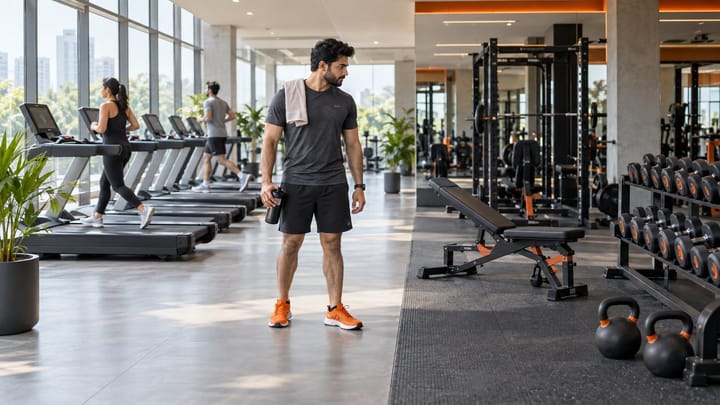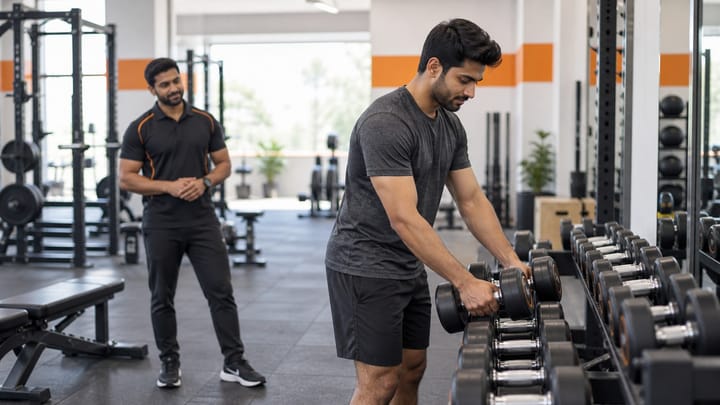
Do Beginners Need to Train to Failure to Build Muscle?
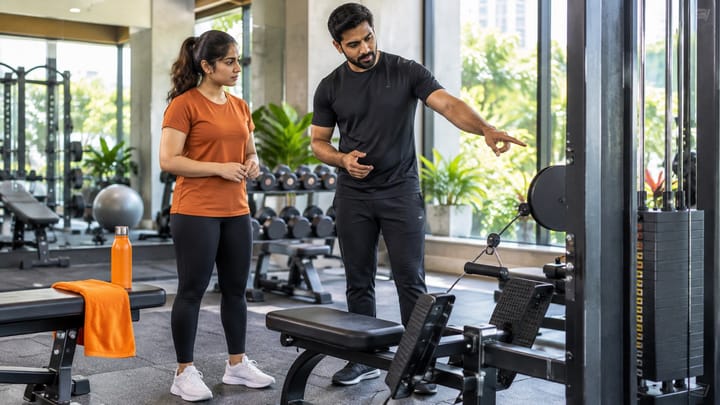
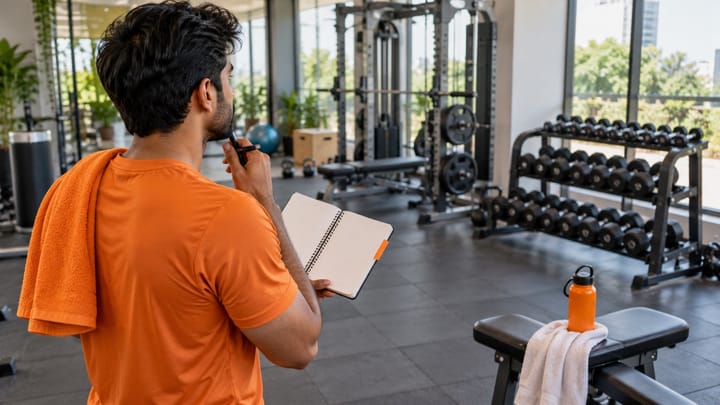
Training to failure is not a requirement for beginner muscle growth. Understand effort, technique limits and repetitions in reserve without testing your maximum.

Gym guides, flexible membership advice, day-pass comparisons, and beginner fitness tips from Fit Square across Mumbai, Navi Mumbai, Thane and Bengaluru.
Training to failure is not a requirement for beginner muscle growth. Understand effort, technique limits and repetitions in reserve without testing your maximum.
Keep familiar breakfasts and give protein-containing foods a clear place in the meal. Three illustrative preparations show the ingredients, approximate protein and energy, with practical alternatives for vegetarian, egg-eating and time-pressed mornings without setting a compulsory breakfast target.
A seated cable row and a chest-supported row machine need different setup conversations. This guide helps you identify the station, understand the public reference instructions, and record useful settings without borrowing someone else's technique, resistance or machine assumptions.
Use the clock to support the next controlled set, not to rush it. Learn when a longer pause is useful and how to budget for rest in a short gym visit.
Compound and isolation describe how an exercise moves, not how serious your workout is. Use clear examples and a practical plan audit to understand why both can have a role without turning your first routine into a long equipment checklist.
Let a normal Indian meal do the job after your workout. Compare morning, after-office and delayed-dinner situations, choose a practical bridge snack when needed and avoid treating recovery as a compulsory shake or thirty-minute race.
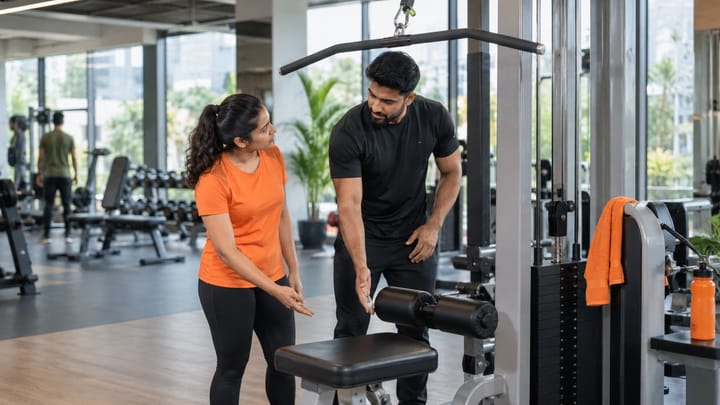
A cable pulldown with a long bar is not the same setup as a machine with separate moving arms. Learn what to identify, what to ask the floor trainer, and how to use public instructions without copying another person's settings or load.
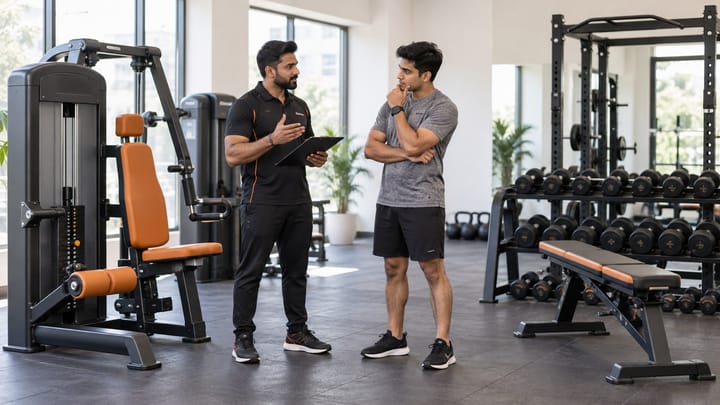
The first exercise should follow the purpose of your programme, not whichever machine happens to be empty. Learn to read the planned sequence, recognise paired exercises and ask for approved alternatives when equipment, time or unfamiliar instructions change the session.
You can begin with machines, free weights or a mixture. Compare the actual exercise, fit, setup, available loads and help instead of choosing a side.
An annual discount is only one part of a membership decision. Compare the full commitment with realistic attendance, detailed written policies and a genuinely monthly alternative, while keeping prepaid no-expiry session packs separate from calendar-based plans.
Inspect the equipment, available resistance, support and opening rules you actually need. Your apartment gym may be enough, or one specific gap may justify another option.
Compare dal, chana, paneer, milk and other vegetarian foods by the portion you actually eat. See why dry and cooked weights differ, how to check packaged products and how to build ordinary meals without relying on protein powder.
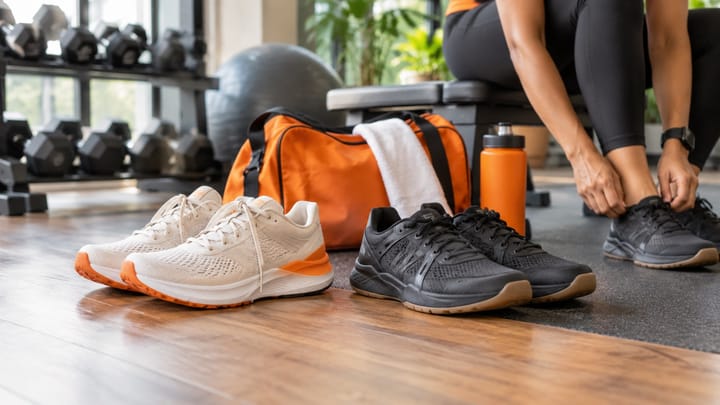
A running shoe can suit running without being the best answer for every gym task. Assess your planned activities, fit, grip and stability before deciding whether to keep your existing pair, ask for advice or buy a different type.
Compare how full-body, upper/lower and push-pull-legs routines fit a two- or three-day week, including what happens when you miss a session.
You do not need a different coloured workout or permission to enter the weights area. Begin with goals that matter to you, learn equipment with appropriate support and ask your trainer how the plan fits your experience, schedule and circumstances.
Start with the quantity behind the numbers, then calculate what you actually eat. A fictional packet example explains serving sizes, whole-pack totals, product comparisons and ingredient checks, without treating reference allowances as personal dietary targets.
Prepare for lifting with a short, reusable checklist rather than a compulsory circuit. Separate easy movement from exercise-specific rehearsal, check the equipment you will use and recognise when you are ready to follow the working sets in your plan.
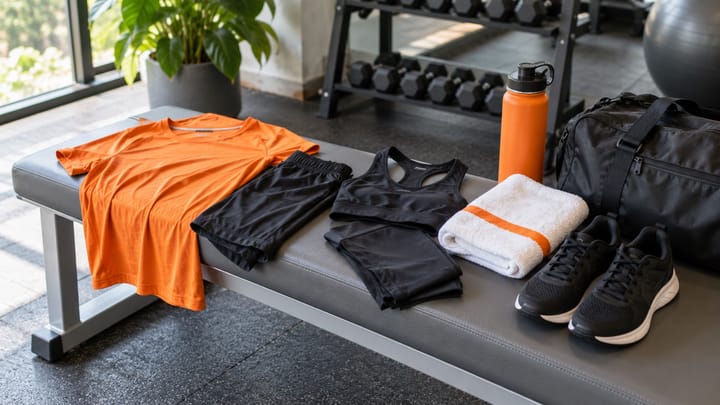
Your first gym outfit needs to work when you move, not just when you stand in front of a mirror. Use a simple fit check for tops, bottoms, footwear and support, then confirm the venue's rules before buying anything new.
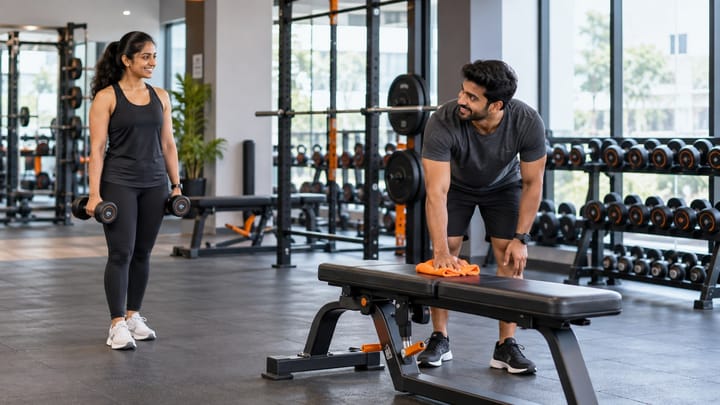
Know what to say when a machine is busy, how working in works, and when to ask staff. Includes practical scripts for sharing, cleaning and filming boundaries.
Compare current personal training quotes by the service you will actually receive, not just the advertised session price. Check appointment time, individual attention, coaching scope, access charges and written conditions before deciding which package fits your needs.
Put the session's priority first, after an appropriate warm-up. Compare strength-first, endurance-first and separate-session options without a one-size-fits-all rule.
There is no useful universal beginner kilogram chart. Learn to match resistance to an exercise and rep target, interpret machine labels and decide what to adjust.
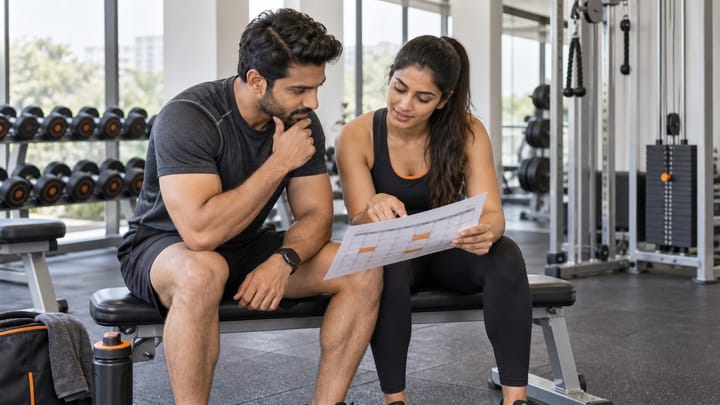
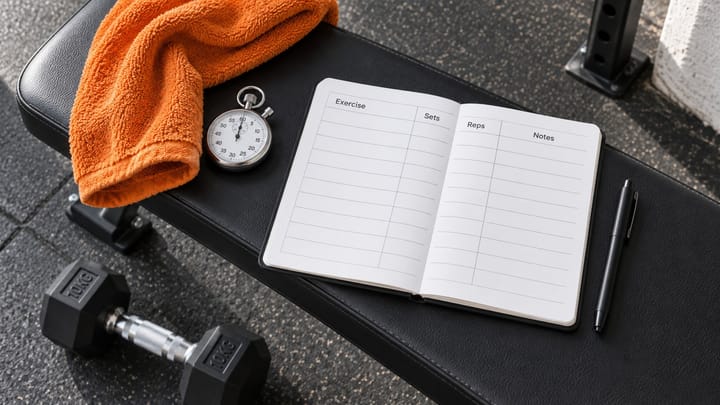
Decode a workout card without guessing. Understand sets, repetitions, rest, per-side counts and effort notes through a clearly labelled worked example.
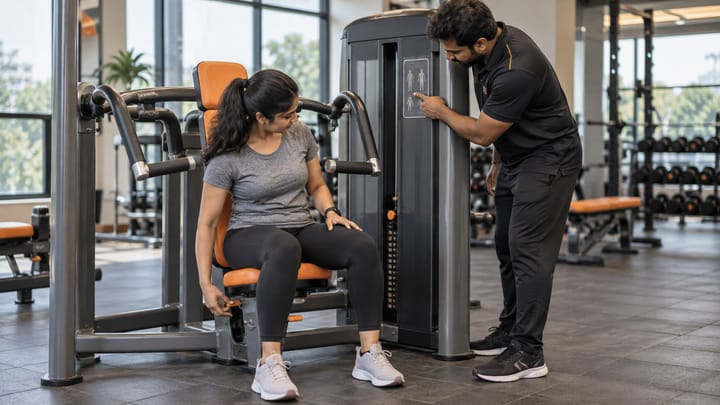
Learn what to check before using a machine: its purpose, seat and pad adjustments, resistance controls and exit. Includes manufacturer references and two exercise examples.