Gym Etiquette for Beginners: Sharing Equipment Without Feeling Awkward
Know what to say when a machine is busy, how working in works, and when to ask staff. Includes practical scripts for sharing, cleaning and filming boundaries.
You can ask to use equipment, take a reasonable rest and request help without apologising for being a beginner. Good gym etiquette is mainly about making your intentions clear, leaving equipment ready for the next person and respecting space and privacy.
Wait until someone has finished their set before speaking. Ask whether they are still using the equipment, agree on any sharing arrangement, and follow the venue's rules. You do not need to interrupt a lift, copy someone's weights or accept an arrangement you do not understand.
The conversations below are illustrative scripts, not reports from gym visits. Use whichever wording feels natural.
How do you ask whether a machine is free?
Stand where the person can see you without blocking their movement or access to the rack. Once the set is finished, a short question is enough: 'Are you still using this?'
If they say yes, ask: 'How many sets have you got left?' That gives you information; it does not oblige you to wait beside them. You can use another agreed exercise or return later.
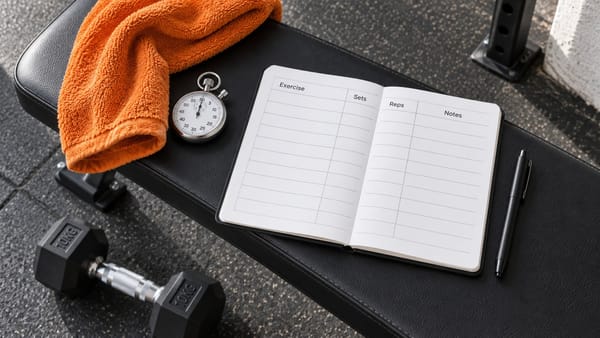
A towel on a bench is ambiguous. The owner may be getting a drink or may have forgotten it. Ask nearby users or staff instead of moving someone's belongings. Equally, do not leave your own bottle on a second machine as a reservation while you work elsewhere.
What does 'working in' mean?
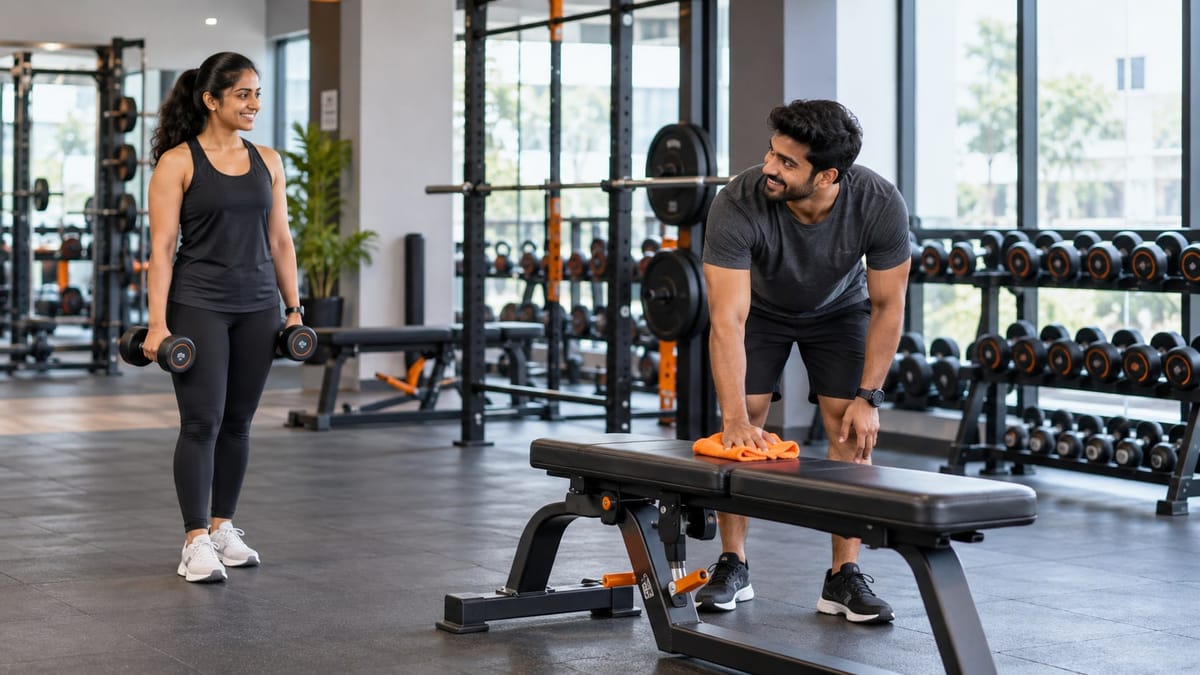
Working in means taking turns on the same equipment between sets. It can be useful when the setup changes are straightforward and both people know how to make them. It is not two people using moving equipment at once, and it does not mean sharing the same weight.
Ask: 'Could we alternate sets, if changing the setup works for both of us?' If they agree, confirm the settings before starting. A clear exchange might look like this:
- You: 'I need a different seat height. Is it practical to change it between us?'
- Other person: 'Yes. Mine is on this setting; please let me reset it before my turn.'
- You: 'Thanks. I'll finish the set, let the stack rest and clear the seat.'
If you have not learned the controls, ask staff to explain them first. Our machine-use guide covers the setup questions worth resolving before working alone or sharing.
Can you say no to working in?
You can explain why a particular arrangement is not workable and ask staff how to handle the queue. For example: 'I'm still learning this setup. Could I finish this set, then we can ask staff about sharing?'
Do not promise a fixed finishing time if you do not know it. Giving an honest number of remaining sets is more useful. If sharing would require repeatedly rebuilding a complicated setup, another station or waiting may be simpler, subject to the gym's rules.
Venue rules differ. Sport Aston's published rules, for example, ask users to share between sets during busy periods. That is a real example from that facility, not a rule we have verified at every Indian gym. Ask staff about your venue's approach rather than using an online article to win an argument.
How can you rest without monopolising equipment?
A planned break is part of a workout, not proof that a person is wasting time. Keep your own break purposeful and be available to answer a waiting user's question. Logging a set on your phone is different from settling in for a long call.
If someone asks how long you need, say: 'Two sets left, with a break between them.' If you leave to take a call or do another exercise, make it clear that the equipment is available. Avoid claiming several machines for a circuit during a busy period unless the venue has organised that arrangement.
If another person's occupation of equipment becomes a recurring problem, ask staff for help with access. Hovering, filming them or commenting on how serious their workout looks will not resolve the queue.
What should you do with weights when you finish?
Return dumbbells, plates and accessories to their designated places. Do not assume that the next person wants the load you used. If someone specifically asks to take over a loaded machine, make sure you both understand the handover and that it follows venue rules.
If you cannot safely handle a plate someone else left behind, ask for help. You do not have to demonstrate strength to clear abandoned equipment. Keep aisles, benches and access to the dumbbell rack free of loose kit.
These are common courtesy principles, but the details are facility-specific. Newcastle University's gym rules, for example, specify returning equipment, unloading plates and restrictions on dropping weights. Your gym may have designated lifting areas and its own rules on chalk, footwear or bags. Check rather than infer.
How should you clean shared equipment?
Use the venue's supplied cleaning method on the surfaces you have contacted, following the product and equipment instructions. Ask staff where wipes or spray should be used; do not apply chemicals to yourself or improvise mixtures.
CDC guidance for athletic facilities recommends cleaning shared equipment after use, allowing it to dry and following manufacturer instructions. Disinfectants also need their specified contact time. A quick pass with a dry towel is not automatically equivalent to cleaning and disinfecting.
When sharing a machine, leave time for the cleaning procedure between people. If supplies are missing, ask staff to replenish them. Cleaning equipment is a practical courtesy and infection-prevention measure, not a reason to comment on another person's body or appearance.
Is filming your workout acceptable?
Check permission with the gym before recording, and keep other people out of the frame, including in mirrors. Someone agreeing to share a bench has not agreed to appear in your video. Do not film in changing rooms or washrooms.
Policies are not identical: Newcastle University's rules prohibit filming identifiable members without consent and do not allow tripods, while Sport Aston requires venue permission for filming. Those examples show why 'other people do it' is not reliable permission.
If a camera is pointed towards you, a direct request is enough: 'I don't want to be in the recording. Please change the angle.' If the person refuses or you feel uncomfortable approaching them, ask staff to intervene. Do not escalate by recording them in return.
What if someone offers advice or asks you to spot?
You can decline unsolicited advice politely: 'Thanks, I'm following my own plan. I'll ask staff if I need help.' You do not owe anyone a discussion about your body, goals or medical history.
If you are asked to spot a lift you do not know how to assist, say: 'I haven't been taught to spot that lift. Let's ask someone qualified.' Do not agree because you feel embarrassed. Likewise, do not touch another person's equipment or body to correct them without permission.
Harassment, persistent unwanted attention and intimidation are not beginner etiquette mistakes to tolerate. Move away and involve staff. For ordinary concerns about choosing a more comfortable environment, see the gym-comfort guide.
What should you ask at a new gym?
Three questions cover much of the uncertainty: 'Where do I store my things?', 'How does sharing work when it is busy?' and 'What are your cleaning and filming rules?' The first-day guide covers the wider arrival checklist.
When comparing venues in the Fit Square app, confirm the rules and staff availability at the gym you intend to use. No prebooking is required for a compatible Fit Square gym visit: walk in and use QR check-in. That entry process does not reserve a machine or override the venue's shared-space rules.