
First Day at the Gym: What to Do, Carry and Avoid
What to pack, how to enter, what to ask staff and how to approach a manageable first gym visit, with clear soreness and emergency warning boundaries.
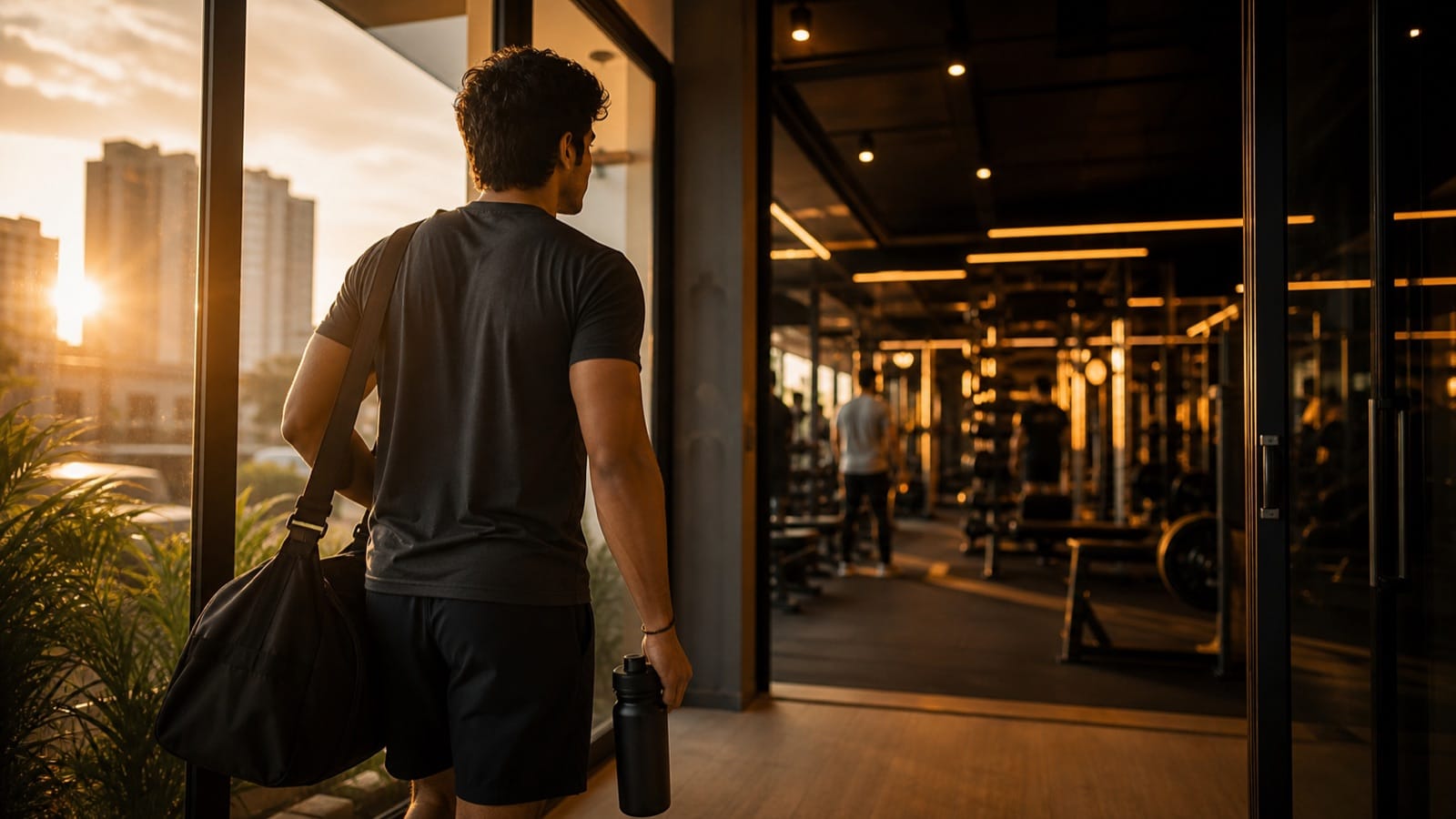
On your first gym day, learn the space, ask how equipment works and keep any exercise manageable. You do not need to test your strength or complete a long workout. The useful outcome is knowing how to return and what help you need next.
You may wonder what to wear, where to put your bag or whether you should already know a programme. Treat the first visit as orientation: check the route, entry process, changing area, equipment layout and your comfort. This guide is general adult education, not an individually prescribed workout.
What to carry
| Item | Practical reason |
|---|---|
| Comfortable clothes and suitable training shoes | Wear clothes that allow movement and shoes with reliable grip. |
| Water bottle and towel | Check the gym's drinking-water and towel arrangements. |
| Phone with sufficient charge | Useful for access details, directions and Fit Square QR check-in. |
| Lock, if required | Ask about locker access before leaving valuables. |
| Change of clothes and toiletries | Bring these if you will shower or go straight to work or college. |
You do not need to buy supplements or a large collection of gym accessories for an orientation visit. Pack the items your actual journey and the venue's rules require.
Sort out entry before exercise
Tell the front desk that it is your first visit and ask for an introduction to the space. Establish what help is included: an equipment induction, general floor assistance and paid personal training are different things.
For Fit Square, you need a compatible gym and an eligible session balance. No prebooking is required: walk in, scan the QR code and work out. A completed visit uses one session. Fit Square sells prepaid packs starting at 30 sessions, not a standalone first-day trial; unused sessions never expire. Ask a venue separately if you only want a tour or its own single-visit option.
Learn the space first
Locate the washrooms, changing rooms, water, workout areas and exits. Ask where bags belong and how to get staff assistance. Find out the rules for cleaning equipment, returning weights and filming. Keep walkways clear and check whether someone is still using equipment before taking it.
Ask staff to demonstrate the start, stop and emergency controls on cardio equipment and the seat, pin and range adjustments on any strength machine you plan to try. Seeing someone else use a machine does not explain the right setup for you.
One optional orientation structure
This is an illustrative visit structure, not a complete training programme. Choose exercises and amounts with a qualified instructor when you need help. You can finish after the tour if that is the right first step.
- Begin with roughly five to ten minutes of manageable walking or cycling to warm up.
- Ask an instructor to demonstrate a suitable lower-body movement, a push and a pull, such as a leg machine, chest press and seated row.
- Practise only the movements whose setup you understand, with a manageable load and controlled repetitions. There is no requirement to complete two sets of everything.
- Finish without testing a maximum or continuing when technique deteriorates. Note the questions and settings you need next time.
Mayo Clinic's technique guidance supports warming up, learning correct form, using controlled movement and stopping an exercise that causes pain. It does not establish one universal first-day duration or weight. A shorter visit is acceptable; 30-45 minutes is not a target you must reach.
What to avoid
- Copying an advanced workout without understanding the exercises.
- Using an unfamiliar machine without checking its controls.
- Trying to make soreness, sweat or a calorie display prove that the visit counted.
- Accepting a training add-on before understanding its scope and cost.
- Buying a long commitment simply because the first visit felt exciting.
Returning after a long break?
Use the same orientation process even if you recognise the equipment. Your old log is background information, not a requirement to reproduce previous loads. Tell the instructor about changes that affect exercise. If you are returning after injury, illness or surgery, or have a relevant medical restriction, obtain guidance appropriate to that situation before resuming.
Soreness, pain and when to get help
Delayed-onset muscle soreness can appear over the next one to three days after unfamiliar exercise. You do not need soreness for a useful workout. If discomfort is mild, avoid another hard session for the sore muscles while they settle. Pain that is sharp, persistent, worsening or limiting normal use needs assessment rather than being dismissed as a successful first workout. See Cleveland Clinic's soreness guidance.
Seek medical attention immediately for muscle pain much more severe than expected, tea- or cola-coloured urine, or unusual marked weakness after exercise. Do not wait for every symptom or try to resolve this by drinking water and monitoring alone. These are warning signs described in CDC guidance on rhabdomyolysis; symptoms alone cannot diagnose it.
Stop exercising and seek emergency help for sudden chest pain that does not go away, or chest pain with breathlessness, sweating, nausea or light-headedness. The NHS chest-pain guidance explains these emergency warning signs. Do not treat them as routine beginner discomfort.
Make the next visit less uncertain
Write a two-line note: what felt clear and what still needs explaining. Keep the route and useful equipment notes. Choose a possible next slot, but adapt it to how you feel and any advice you receive rather than forcing attendance through symptoms.
The beginner gym-frequency guide separates a sample schedule from activity guidelines. For more help deciding on instruction, read personal training versus self-workouts.
Choose an accessible venue in the Fit Square directory and use the Fit Square app link to confirm current entry and pack details. Your first visit can be useful without being exhausting.