Strength Training for Beginners: How to Pick the Right Gym
A beginner strength-training gym guide for choosing equipment, layout, support, progression and a comfortable training environment.
Short answer: For beginner strength training, choose a gym with approachable machines, basic free weights, enough space, helpful staff and a routine-friendly location. You do not need the most hardcore gym; you need a place where you can learn and progress safely.
Strength training can feel intimidating because the free-weight area often looks advanced. But beginners do not need to start with complex lifts or heavy weights. They need clear equipment, patience, good setup and a gym they can revisit.
A strength-friendly gym for beginners is not necessarily the largest gym. It is the one that lets you train major movements, ask questions, recover, and gradually increase difficulty.
Quick decision checklist
- Look for simple machines for legs, push and pull movements.
- Check whether dumbbells and benches are available during your workout time.
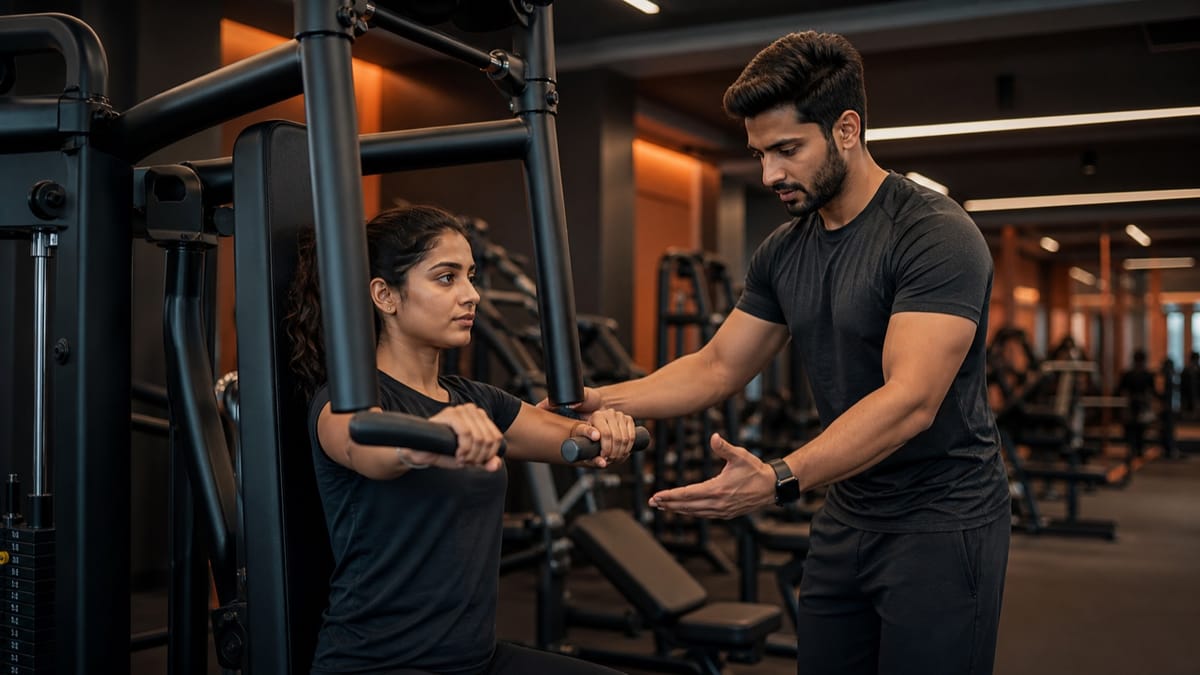
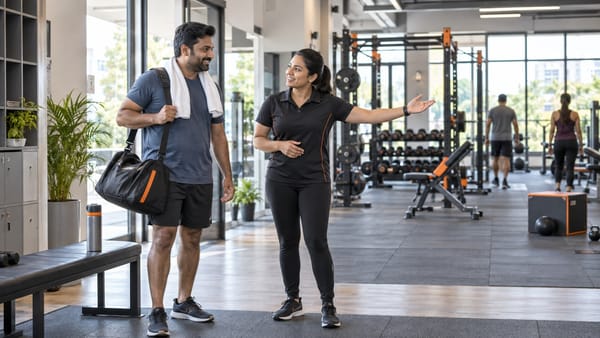
- Choose a gym where staff can explain basic setup.
- Avoid gyms that make beginners feel rushed or judged.
- Prioritize repeatable progression over heavy lifting on day one.
Reviewed for Fit Square: May 2026. This guide is for general fitness planning and gym selection, not medical advice. If you have an injury, chronic condition, pregnancy-related concern, chest pain, dizziness, or a doctor-given restriction, speak with a qualified professional before changing your exercise routine.
Start with equipment you can learn
Beginner strength training works well with machines because they guide the movement path and reduce setup complexity. Leg press, chest press, seated row, lat pulldown and simple cable movements can create a strong starting base.
Free weights are useful too, but they require more control and confidence. A good beginner gym offers both, without forcing you to use the most advanced area immediately.
| Equipment | Beginner value | What to check |
|---|---|---|
| Machines | Easy to learn and repeat | Seat adjustment and clear weight increments |
| Dumbbells | Useful for gradual strength work | Availability of light to moderate weights |
| Benches | Supports many exercises | Crowding during peak hours |
| Cable station | Flexible for push, pull and core | Staff help for setup if needed |
Check space and crowding
Strength training needs enough space to move safely. If the gym is too crowded during your training hour, you may skip exercises or feel rushed. Beginners need time to adjust weights, read machine labels and rest between sets.
Visit at your intended time. A gym with good equipment can still be a poor beginner choice if every station is occupied when you can train.
Do not chase the most advanced environment
A hardcore lifting gym can be excellent for experienced lifters, but it may not be the best first gym for every beginner. If the environment makes you avoid training, it is not serving the first goal.
Choose a place that supports learning. You can always progress to heavier free-weight work later. The first job is to build movement confidence and consistency.
Progression should be simple
Progression means doing a little more over time: one more repetition, one small weight increase, better control or one extra set. It does not mean testing your maximum every week.
Keep a note of exercises and weights. If the gym has clear equipment and manageable crowds, tracking progression becomes easier. This is one reason the right gym environment matters.
Fit Square strength-training route
Use Fit Square to shortlist nearby gyms, then check equipment and timing. For strength training, distance and crowding are just as important as machine count because you need repeated access to the same movements.
If you are unsure whether Basic, Premium or Elite access is enough, compare gyms around your actual route. The right tier is the one that covers gyms you can use consistently.
The beginner strength checklist inside the gym
Walk through the gym and check whether you can train a squat or leg press pattern, a push pattern, a pull pattern, a hip hinge or posterior-chain option, and some core work. You do not need advanced versions of all of these on day one, but the gym should support balanced progression.
Also check the smallest weight jumps. Beginners often need gradual increases. If the available dumbbells or machines jump too aggressively, progression becomes harder to manage.
How to avoid injury-minded fear without being reckless
Strength training should be respected, not feared. Start light, learn setup, control the movement and increase slowly. If anything causes sharp pain, stop and get appropriate guidance. Discomfort from effort and pain from something wrong are not the same signal.
A good gym environment helps you make that distinction because you can ask questions, adjust equipment and train without rushing. That is why support and crowding are part of the strength-training decision.
How to compare strength gyms without being advanced
You do not need advanced lifting knowledge to compare beginner strength gyms. Look for enough machines to train legs, chest, back and shoulders. Look for light dumbbells, benches, open space and staff who can explain setup. Look for a crowd level that lets you rest without feeling pushed away.
Avoid judging only by the heaviest equipment. Heavy plates and advanced racks are useful later, but the first stage needs learnable movements. A gym that helps you repeat good basics is more valuable than a gym that intimidates you into skipping.
Progression also needs consistency of equipment. If you can use the same machine or dumbbell range each week, tracking becomes easier. If every workout is a battle for space, beginners often stop tracking and start guessing.
Fit Square access tiers should be compared through this lens. The right tier is not simply the highest tier; it is the tier that gives you enough strength-training options near the places you live and move.
Once you have a gym that supports basics, stay patient. Strength training rewards repeated small improvements more than dramatic first-week effort.
Strength training needs repeat access
Strength progress becomes easier when you can repeat similar movements week after week. If the gym is too crowded or too far, beginners may keep changing exercises randomly or skip sessions. That makes progress harder to feel.
Choose a gym where the basic equipment is available during your training time. This may be a locality decision as much as a facility decision. A smaller nearby gym with usable machines can be better for a beginner than a larger gym that is always inconvenient.
Fit Square's access tiers should help users compare real strength-training options around their day. The best tier is the one that gives repeat access to the gyms and equipment a beginner can actually use.
This week's practical action plan
Do not leave this guide as only reading material. Turn it into one small decision this week. The action plan below is designed to move from search intent to a real gym choice without forcing a long commitment too early.
Use the steps in order. If one step feels blocked, that is useful information about the routine, location or membership style you need to change before spending more.
After completing the steps, open the relevant Fit Square gym or membership page and compare real options. The article should lead to one practical next action, not another open tab of research.
If two options still feel equal, choose the one that makes the next seven days easier. Short-term repeatability is the strongest beginner signal.
- Check machines, light dumbbells, benches and staff support before joining.
- Repeat a small set of strength movements for the first few weeks.
- Progress gradually through reps, control or small weight changes.
Useful Fit Square pages
- Find gyms near you on Fit Square
- Compare Fit Square gym membership
- Browse gyms in Mumbai
- Browse gyms in Navi Mumbai
- Browse gyms in Thane
Related Fit Square guides
- Personal trainer or self workout: what should beginners choose?
- Weight loss gym near me: what matters before joining
- Basic, Premium or Elite: choose the right access tier
- Multi-gym membership for changing routines
- Shared gym membership for friends and family
Helpful sources
- CDC adult physical activity guidance
- CDC guide to what counts as physical activity
- WHO physical activity fact sheet
Quick answers
Can beginners start strength training without a trainer?
Yes, if they use simple exercises, start light and ask for help with setup. A trainer can still be useful for form and confidence.
Are machines good for beginner strength training?
Yes. Machines can help beginners learn movement patterns and train safely while confidence grows.
How heavy should beginners lift?
Start light enough to control the movement and finish with effort left. Increase gradually only after technique feels steady.
For beginner strength training, choose the gym that helps you learn, repeat and progress. Strength grows best in an environment you can keep using.
2026 update: strength beginners need a calm setup
Short answer: The right strength gym for beginners has usable equipment, enough space, supportive staff and a routine you can repeat safely.
Beginners do not need the most intimidating weight room. They need basic machines, dumbbells, benches, cable options and enough guidance to learn movement without pressure.
A gym that makes you comfortable asking questions can be more valuable than a larger facility where you feel lost.
- Check leg press, cable row, chest press, dumbbells and benches.
- Visit during your likely workout hour.
- Start with full-body basics before advanced splits.
- Ask for form help if pain or confusion appears.
Useful Fit Square pages
Related Fit Square guides
- Personal trainer or self workout for beginners
- First day at the gym: what to do, carry and avoid
- How many days a week should a beginner go to the gym?
Updated for Fit Square: July 2026. This refresh keeps the original guide live while adding clearer decision steps and stronger internal links.