How to Use Gym Machines for the First Time
Learn what to check before using a machine: its purpose, seat and pad adjustments, resistance controls and exit. Includes manufacturer references and two exercise examples.
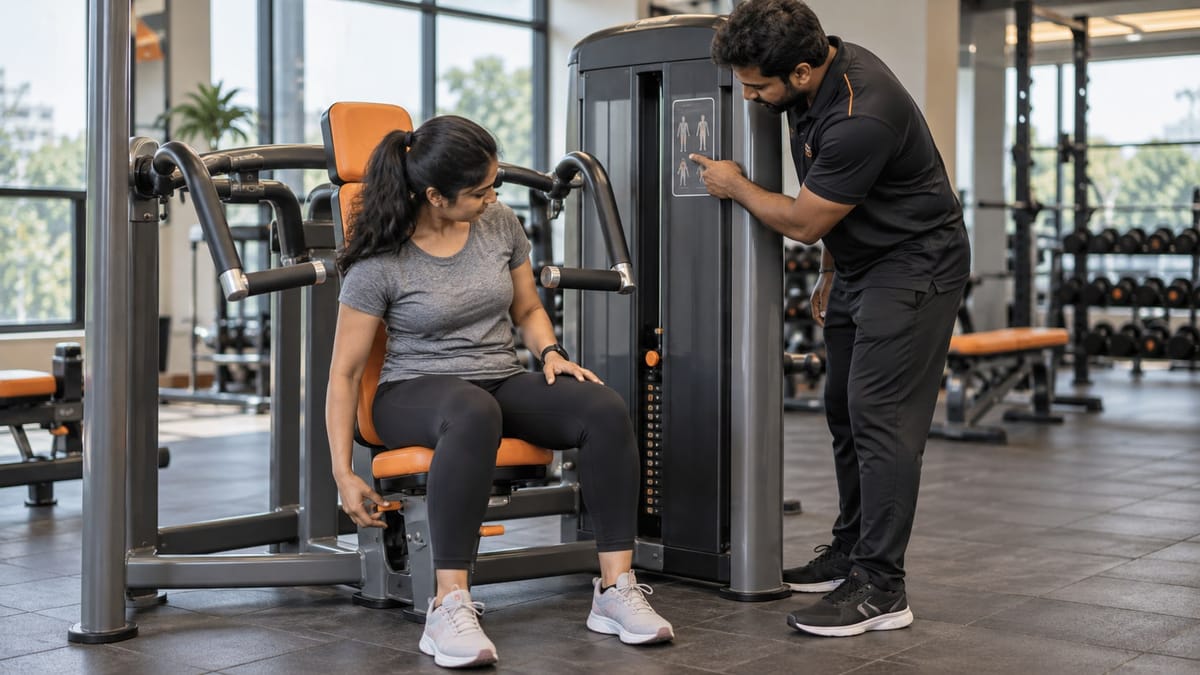
Before using a gym machine, identify the exercise, learn its adjustments, choose an appropriate resistance and check how to finish and get out. Do not assume the previous user's seat setting or weight is right for you. Ask a staff member who knows that model to explain anything you cannot identify.
This guide focuses on common strength machines, with a short checklist for cardio equipment. The examples are educational references, not photographs or demonstrations from a Fit Square partner gym. They cannot replace the instructions on the actual machine or individual advice where you have pain or a medical restriction.
What kind of machine are you looking at?
| Type | What you will notice | What to ask first |
|---|---|---|
| Selectorised strength machine | A stack of weights and a pin for choosing resistance, usually with a fixed seat or pad. | 'Which adjustments fit this exercise, and what does the weight label mean?' |
| Plate-loaded machine | Separate weight plates added to loading arms. | 'How do I load it correctly and use its start and stop mechanisms?' |
| Cable station | A handle or attachment connected to a cable; some pulleys change height. | 'Which attachment and cable position does my exercise require?' |
| Cardio machine | A moving belt, pedals or another continuous movement, often with a console. | 'How do I start slowly, stop normally and use the emergency stop?' |
Some equipment does not fit these categories neatly. A resistance dial, an assisted-movement machine or a combination station needs its own explanation. Avoid experimenting with a control merely because it looks like the one on the next machine.
What should you check before sitting down?
Read the exercise name and warning labels. If a label is unreadable, a cable looks damaged, an attachment is insecure or a part seems jammed, leave the equipment unused and report it. Do not try to repair it.
The Life Fitness Circuit Series manual gives several important safety instructions: fully engage adjustment pins, never remove a selector pin while weights are suspended, keep clear of moving parts and never substitute a makeshift pin. Make weight changes only once the stack is fully resting. Follow the matching manual for your machine rather than treating this summary as its complete safety procedure.
Make room for yourself without placing your bottle or phone beside the moving stack. If the equipment is occupied, wait until the person has finished their set before asking about it. You do not need to rush a first setup because someone is waiting.
How do you work out the seat, pad and starting position?
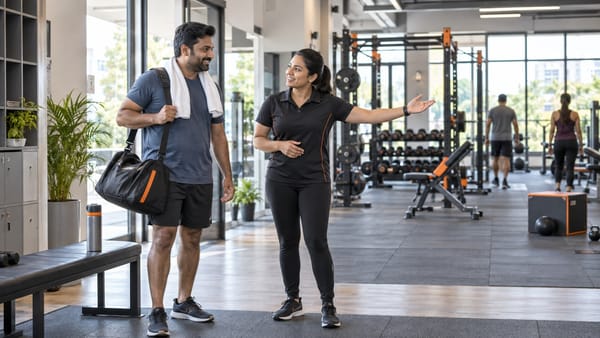
Ask for a short explanation of each adjustment before doing a set. A useful request is: 'Please show me which controls change the seat, the starting reach and the resistance, then watch me set them myself.' This lets you check that you understood the demonstration instead of relying on memory of someone else's movements.
For a concrete manufacturer example, the Precor Vitality Chest Press VSL001BP has an adjustable seat, an adjustable back pad and an add-on resistance lever. Those are different controls with different purposes. Its product description does not provide a universal seat number for your height, nor does it establish that the machine is available at a particular Fit Square gym.
Record settings only after they have been checked for you on that exact machine. 'Seat 4' without the machine's name is an incomplete note. A different make or model can have different adjustment points, movement paths and labels. Precor's product-guide directory is an example of where to find model-specific documentation; ask staff for the equivalent resource for the brand in front of you.
What does a chest-press setup look like?
For a conventional seated chest press, the American Council on Exercise's illustrated guide places the handles around mid-chest height, with the back supported and feet secure. Grip with wrists in line with the forearms. Press and return under control rather than rounding forward to reach farther.
Use that as a reference for a setup conversation, not a reason to force your shoulders into an uncomfortable starting position. Ask staff to check the seat and start-position adjustment if you cannot reach the handles comfortably. If the exercise causes pain, stop; do not keep altering the seat and pushing through it. Persistent or recurring pain needs healthcare advice.
What is different about a seated leg press?
A seated selectorised leg press is not the same setup as an angled, plate-loaded sled. Learn the version you have rather than copying a video of the other type.
In ACE's seated leg-press guide, the back stays supported and the heels remain on the platform. The movement is controlled in both directions; the knees should not be forced into hyperextension, and the return should not lift the pelvis from the seat or crowd the thighs into the torso.
Ask someone qualified to check your starting position and usable range. Going as deep as another person or moving the same number of plates is not the task. If the machine cannot accommodate you comfortably, ask about a suitable alternative instead of wedging yourself into it.
How should you choose the first resistance?
Start with instruction and a manageable practice load, not the setting left by the previous user. A pin number is a setting, not a target. If you cannot move smoothly, return to the resting position and ask for help before changing anything.
The practice attempt is for learning the movement and controls, not proving strength. You can say: 'I understand the seat now, but I am not sure about the resistance. Can you watch a light attempt?' Guidance on technique and stopping an exercise that causes pain is available in Mayo Clinic's weight-training advice.
What about treadmills, bikes and cross-trainers?
Have staff show you the normal start and stop sequence, any safety clip, the speed or resistance controls, and how to get on and off that model. Learn the controls before selecting a preset programme. A programme name such as 'fat burn' does not tell you whether its speed or resistance suits your current ability.
Do not use a strength-machine guide as a substitute for cardio-equipment instructions. A treadmill has a different entry and exit procedure from a stationary bike. If you have only used one before, say so when asking for help.
What should you remember for the next visit?
Keep a short note rather than collecting dozens of exercise videos. An illustrative record might say: 'Chest press by the entrance; model checked with staff; seat and back-pad settings recorded; ask again about the add-on lever.' These are example fields, not settings to copy.
- Machine name or model and where it is located.
- Seat, pad or starting-position settings checked for you.
- Resistance setting and its displayed unit.
- Any question that remains before you use it alone.
If you need more than a setup explanation, the trainer-versus-self-workout guide can help you decide what support to ask for. Basic orientation and paid personal training are different services; availability and charges should be confirmed with the gym.
Use the Fit Square directory or Fit Square app to find a compatible gym, then ask about the equipment and orientation you need. An access tier does not guarantee a particular machine model or included coaching.