
Seated Row for Beginners: How to Set Up and Follow the Movement
A seated cable row and a chest-supported row machine need different setup conversations. This guide helps you identify the station, understand the public reference instructions, and record useful settings without borrowing someone else's technique, resistance or machine assumptions.
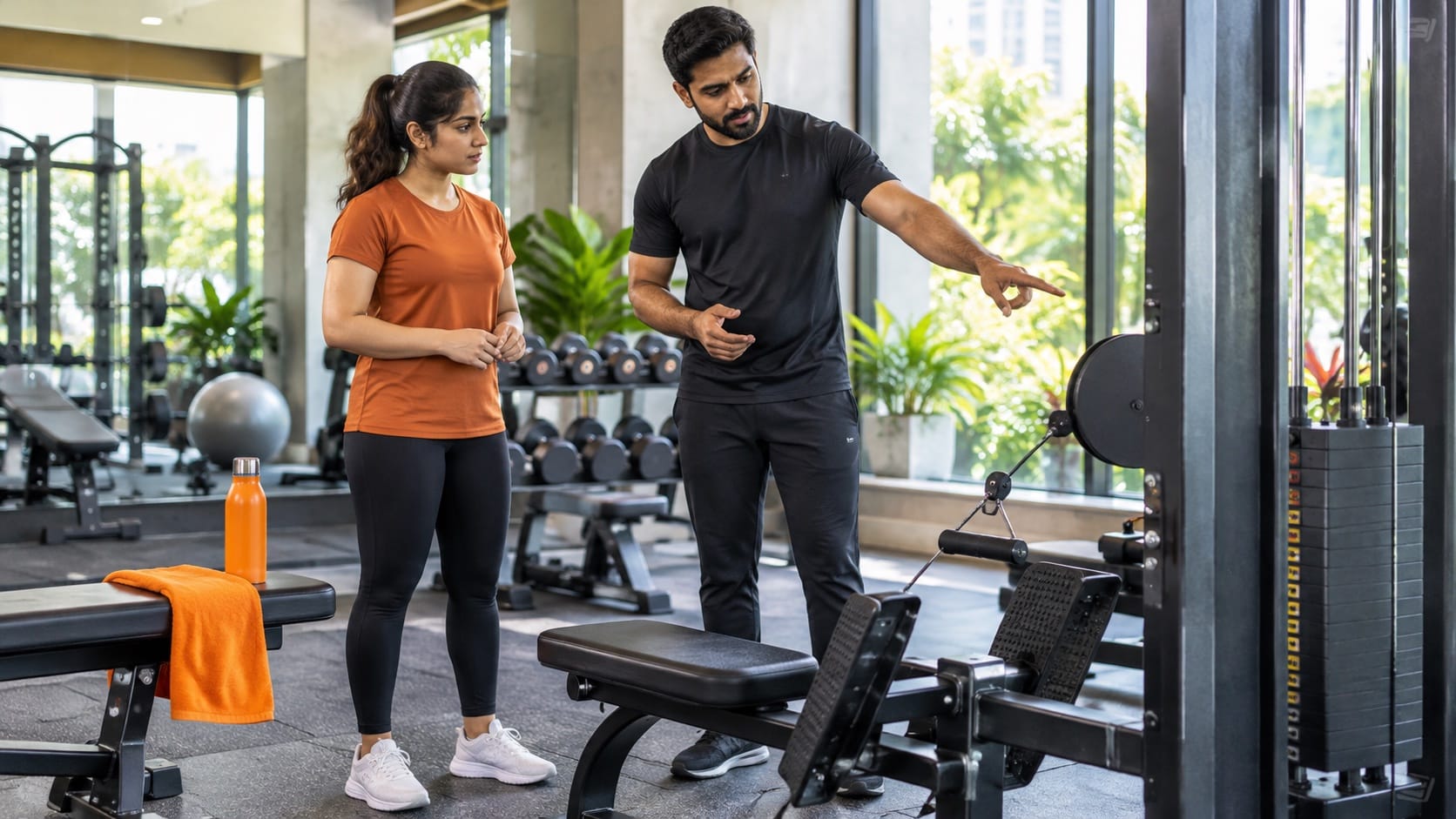
A seated row starts with identifying the station. A low cable row asks you to organise your seated position around an attachment and foot support. A chest-supported machine adds a pad and may have separate moving arms. Treating both as one setup can leave you adjusting the wrong thing.
This checklist separates the two versions before a practice attempt. Follow the instructions for the actual station and obtain individual instruction for fit, comfortable range and suitable resistance.
Two stations with the same exercise name
On a cable row, look for the cable outlet, approved attachment, seat or bench, and intended foot support. On a dedicated supported row, identify the seat and chest pad before choosing the resistance. Some stations combine functions, so read the label rather than assuming every handle belongs to a row.
The Life Fitness Insignia Row SS-RW is a manufacturer example with independent diverging movement. That is a different arrangement from a single cable attachment. Neither the product name nor the word seated establishes the exact path used by another model.
| Version | Main setup questions | Reference to match |
|---|---|---|
| Low cable row | Where do I sit, support my feet and return the attachment? | A cable-row instruction page and the actual station label. |
| Chest-supported row | How do the seat and chest pad affect reach? | Instructions for a supported machine, not a bare cable bench. |
| Independent-arm row | How do the arms move, and what adjustments are provided? | The matching manufacturer's instructions. |
The first-time gym-machine guide explains the broader categories. Here the focus is the row-specific question: which supports and movement path are you actually learning?
Use the reference for your row version
ACE's official cable-row reference shows a narrow-handle cable version, with the elbows travelling backwards during a controlled pull and the arms returning slowly. Its seated position belongs to that example; another cable station may have a different bench or foot platform.
ACE's supported-machine row reference instead includes a seat and chest pad. It describes secure foot support, chest-pad contact and a controlled return without leaning backwards to finish the pull.
Use the original illustrated reference to identify the version, then compare the actual support and handles. If your station differs, resolve that difference before trying to combine instructions from the two pages.
A setup checklist for cable and supported rows
| Check | Cable row | Chest-supported row |
|---|---|---|
| Seated position | Identify the intended seat or bench and foot support. | Identify the seat adjustment and intended foot support. |
| Reach | Know how to obtain the cable attachment before settling into the starting position. | Check reach with the seat and pad together; moving the pad changes the relationship to the handles. |
| Torso support | There may be no chest pad; do not borrow pad-contact instructions from a machine row. | Identify the intended chest contact and ensure the pad adjustment locks. |
| Handle | Confirm the approved attachment and secure connection. | Confirm the built-in grip and whether the arms move independently. |
| Return and finish | Know the attachment's resting position and intended release. | Know the handle resting position and how to leave the support. |
A handle being within reach is only one check. On a supported machine, the pad must also fit the intended position; on a cable row, the seating and foot-support arrangement must suit the station. Make fit adjustments with resistance resting and according to the model's instructions.
If a control will not lock, the attachment is insecure or the instructions are unreadable, leave the station unused. Do not test a questionable support under load to find out whether it holds.
Recognise the pull and the return
A repetition includes the way back. In the cable example, the handle travels towards the front of the torso before returning slowly. In the supported example, chest-pad contact remains part of the task while the handles move. Those are different support arrangements, not competing universal posture rules.
Check three observable points against the matching reference: the starting reach is obtained as intended, the pull follows the taught path without throwing the torso backwards, and the return stays controlled. The endpoint should be checked for your version rather than forcing every handle to touch a particular body landmark.
The SS-RW's independent arms need their own explanation. A single cable handle moving towards the torso does not demonstrate how those arms travel. Learn which grip and arm arrangement is intended before adding another variation.
Handle choice is a setup decision
On a cable station, a narrow attachment and a straight bar are different objects to hold. A supported row may instead offer built-in grip options. Ask which option is being taught and whether the manufacturer permits the attachment you intend to use.
You do not need a separate first-day exercise for every grip. If a handle feels awkward, explain where and stop the attempt if there is pain. Do not start collecting attachments as a way of diagnosing the problem yourself.
A row and a pulldown also have different movement directions and setups. The pulldown setup guide can help you identify that other station, but it is not a replacement for row instructions. Both being pulling exercises does not make their settings interchangeable.
Use the first attempt to check the setup
At a manageable practice resistance, have the floor trainer check access, support, movement and finish together. If the pull requires throwing your torso backwards, or the return cannot be controlled, stop and revisit the setup or resistance rather than trying to finish a number.
The beginner load guide covers resistance choice. Keep the confirmed attachment and support settings with the machine name, because a cable row and supported row are not interchangeable entries.
Know when to leave the station unused
The Life Fitness Optima manual warns against using damaged equipment, handling suspended weight-stack pins or attempting to release jammed parts. It also includes OSLR row instructions. This legacy manual is useful for its named model and safety examples, not as a universal manual for every row.
Report a frayed cable, insecure attachment, pad that will not lock or unexpectedly catching movement. Keep your phone and bottle outside the moving parts. You are not responsible for repairing a shared station, and another person's willingness to use it does not establish that it is fit for use.
Stop for pain or feeling unwell and obtain appropriate help. Persistent or recurring pain needs healthcare assessment. For chest discomfort that does not settle or chest pain with breathlessness, seek emergency help; NHS guidance explains why these symptoms must not be dismissed as ordinary workout effort.
Choose access that supports learning
When comparing the Fit Square gym listings, ask which row stations are available and when staff can explain them. Use the Fit Square app to check eligible access, not as evidence that a particular machine or personal-training service is included. An understandable station with available help is a practical selection criterion.
Sources and instruction pages
- ACE: cable row
- ACE: supported row
- Life Fitness: SS-RW design
- Life Fitness: OSLR manual
- NHS: chest-pain advice
Questions before rowing
Is a seated row a rowing cardio machine?
No. This article covers resistance rows, not the continuous movement of a rowing ergometer.
Do all seated rows have a chest pad?
No. Match your instructions to a cable station or a supported machine.
Should I lean back to complete the pull?
Do not improvise a lean to finish. Have the intended movement and resistance checked on your version.
Can I reuse my settings at another gym?
Only after checking the equipment. Model, attachment, supports and resistance system may differ.