
Lat Pulldown for Beginners: Setup, Movement and Common Questions
A cable pulldown with a long bar is not the same setup as a machine with separate moving arms. Learn what to identify, what to ask the floor trainer, and how to use public instructions without copying another person's settings or load.
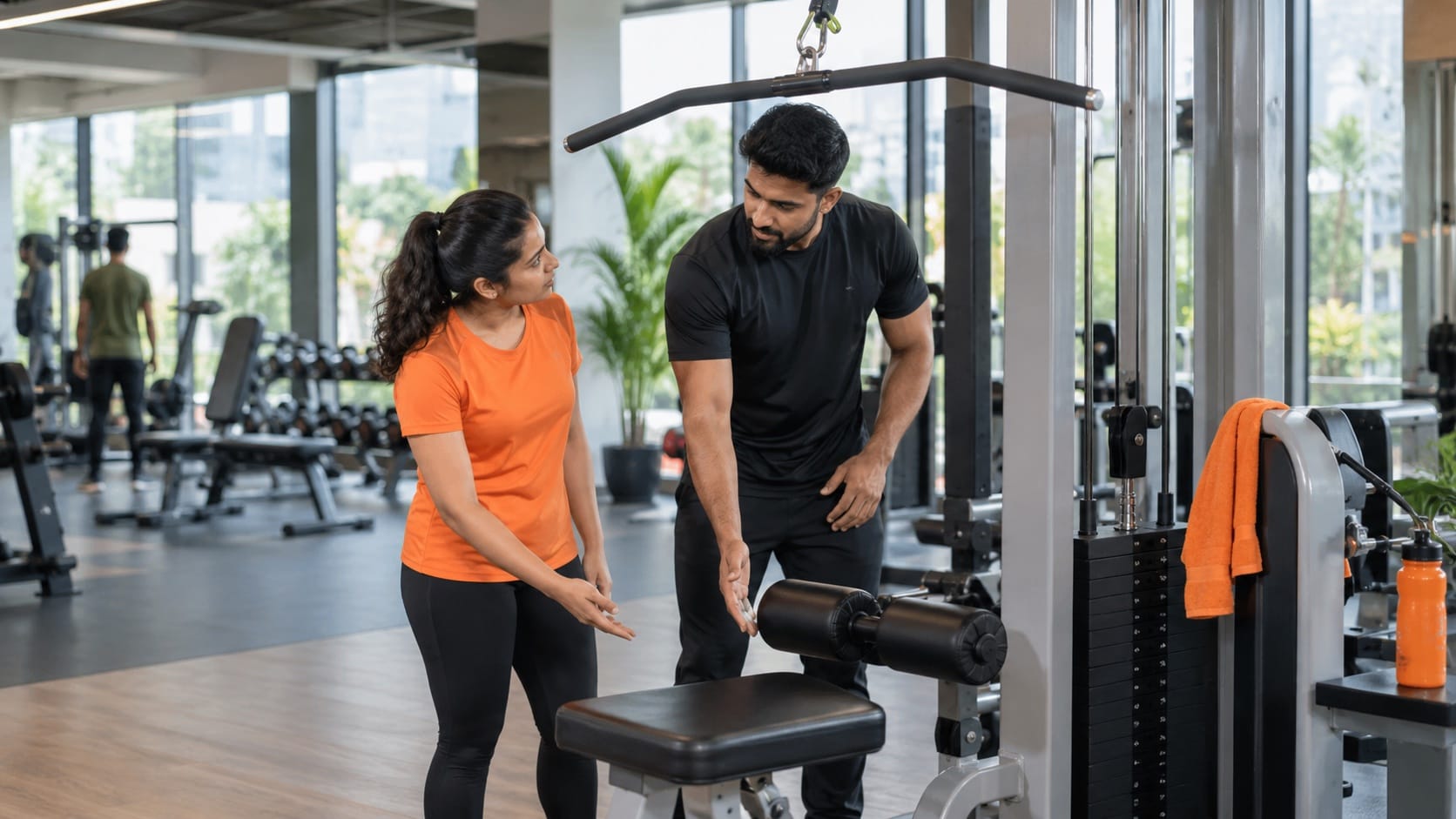
Before trying a lat pulldown, identify the model, learn its seat and thigh-support adjustments, and ask how to reach and return the handles. The best first question is not how many kilograms to select. It is whether you understand the whole task on the machine in front of you.
A pulldown is an upper-body pulling exercise, but machines sharing that name can use different paths and controls. Use this checklist with the instructions for your exact version. Individual instruction is needed to check your fit, comfortable range and practice resistance.
First identify which pulldown you have
A cable station may have a long bar attached above a seat. A dedicated lever-arm machine may instead have two handles whose paths are determined by the equipment. A combination station can share components between pulldown and row exercises. Look for the manufacturer name and model code before matching it to a guide.
For a concrete difference, the Life Fitness Insignia Pulldown SS-PD uses independent, diverging movement. Its handles are not a single cable bar. The manufacturer's Optima OSLR manual includes a combined lat-pulldown/seated-row station with a bar and thigh supports. Match the nameplate at your gym to the version you intend to use.
| What you see | What to establish | Do not assume |
|---|---|---|
| Cable and long bar | Approved attachment, reachable start and correct cable route. | Any bar from another station is interchangeable. |
| Independent handles | Whether arms move separately and how the start position adjusts. | A wide-bar demonstration describes this path. |
| Combined pulldown and row | Which components belong to the exercise you intend. | The previous user's configuration is ready for pulldowns. |
Check the conventional bar version against ACE
ACE's official seated lat-pulldown reference demonstrates the conventional bar version. Use its illustrated instructions to compare the supports and movement with your station; they do not describe an independent-arm SS-PD.
- Locate the thigh support. In this reference it anchors the seated position. Check which control adjusts it and whether it locks; a pad you cannot secure is a reason to leave the machine unused.
- Check overhead handle access. Identify how the bar is intended to be reached and returned. The seat, pad and access procedure must work together without climbing on the seat or improvising a jump.
- Recognise the front-pull path. ACE's example brings the bar towards the front of the upper or mid-chest, without adding backward lean during the pull. It is not a behind-the-neck demonstration.
- Check the endpoint rather than forcing contact. The reference describes stopping before the elbows begin travelling backwards instead of downwards. If reaching the chest requires rocking or a painful range, stop the attempt.
- Include the upward return. The bar returns under control; the task is not complete when the downward pull finishes. Establish the machine's resting and exit procedure before a set.
These are checkpoints for the named reference, not universal body angles or a grip prescription. A floor trainer should check how the version fits you and demonstrate any access or finish detail that differs on your machine.
Separate the seat, pad and reach questions
| Check | What you need to identify | Reason to pause |
|---|---|---|
| Seat | Its adjustment and intended seated position relative to the handles. | The handles cannot be reached using the intended procedure. |
| Thigh pad | The locking control and where the support contacts you. | It will not lock or the seated position cannot be secured. |
| Starting reach | Which bar or handles are used and how you access them. | Access requires climbing, jumping or an unapproved attachment. |
| Resistance | The intended selector or loading system, with resistance resting before changes. | A pin is missing, partly inserted or the stack is suspended. |
The Optima manufacturer's safety section requires adjustment pins to be fully engaged and warns against changing a selector pin while weights are suspended. Do not substitute another object for a pin or try to free a jammed stack.
Seat height and thigh-pad height are not substitutes for each other. Recheck the pad and reach after a seat adjustment rather than assuming one comfortable setting resolves every part of the setup. The first-time machine guide covers the broader operating checklist.
Ask about the grip instead of chasing a widest-grip rule
A fixed bar, a neutral-grip attachment and independent handles offer different choices. An attachment choice is not only a preference about how it looks; it changes what you hold and which instructions are relevant. Ask what is intended for your machine and plan.
Useful questions include: 'Can I reach these handles without being pulled out of position?', 'Which grip are you teaching me today?', and 'Should this attachment be changed by staff?' Do not swap hardware because a video calls another grip best. Keep the approved attachment in place until you know the correct change procedure.
There is no need to collect several grip variations on your first visit. Record the version you learned and become familiar with it before asking about another. Behind-the-neck pulls and unfamiliar variations are not part of this guide.
Check the complete practice attempt
Learn the return as carefully as the pull. Before adding working effort, check the full task: access the handles using the intended procedure, settle into the supports, follow the demonstrated path, return the resistance and exit.
The support should remain secure while the movement happens. If the attempt changes into a large rocking movement or the return pulls you out of the checked position, stop and have the setup and resistance reviewed. A different grip is not automatically the solution.
Establish a manageable practice setting for this model instead of copying the previous user's number. The beginner starting-weight guide explains that decision separately.
Common situations worth pausing for
- You cannot reach the starting handles comfortably: ask about the intended access procedure and fit. Do not climb on the seat or improvise a jump.
- The thigh support lifts or will not lock: leave the machine unused and report it.
- The attachment or cable looks damaged: get staff rather than testing whether it still holds.
- You need a large rocking motion to finish: stop and ask the instructor to check the task and resistance.
- You feel pain or become unwell: stop the activity and obtain appropriate help; do not keep trying grip changes as treatment.
Persistent or recurring pain needs healthcare advice. NHS chest-pain guidance supports seeking emergency help for persistent sudden chest discomfort or chest pain with breathlessness. In an emergency, alert gym staff and contact local emergency services rather than finishing the set.
Make the next visit easier
Write the model, location, confirmed adjustments, attachment and resistance unit in a private note. Include any question still unresolved. 'Pulldown near the window; ask again about handle access' is more useful than recording only a kilogram number.
If you change gyms, repeat the identification step. Similar upholstery or a familiar brand does not establish that the controls and path match. A new machine deserves its own appropriate practice setting.
Use the coaching-versus-self-workout guide to decide whether you need more support than orientation. Compare venues in the Fit Square directory and check eligible access in the Fit Square app. Confirm the pulldown model and coaching arrangements directly; access does not guarantee either.
Reference instructions
- ACE: seated bar pulldown
- Life Fitness: SS-PD movement design
- Life Fitness: Optima OSLR instructions
- NHS: urgent chest-pain advice
Pulldown questions
Should I copy the previous user's seat setting?
No. Have the seat, support and reach checked for you on that model.
Does the bar have to touch my chest?
Do not force contact. Learn the controlled endpoint from the matching instructions and an instructor.
Are independent-arm pulldowns the same as cable pulldowns?
They share a broad pulling role, but their handles, paths and adjustments differ.
How many kilograms should I start with?
There is no universal number. Establish a manageable practice setting with someone who knows the machine.