
Compound vs Isolation Exercises: Why a Beginner Plan Can Include Both
Compound and isolation describe how an exercise moves, not how serious your workout is. Use clear examples and a practical plan audit to understand why both can have a role without turning your first routine into a long equipment checklist.
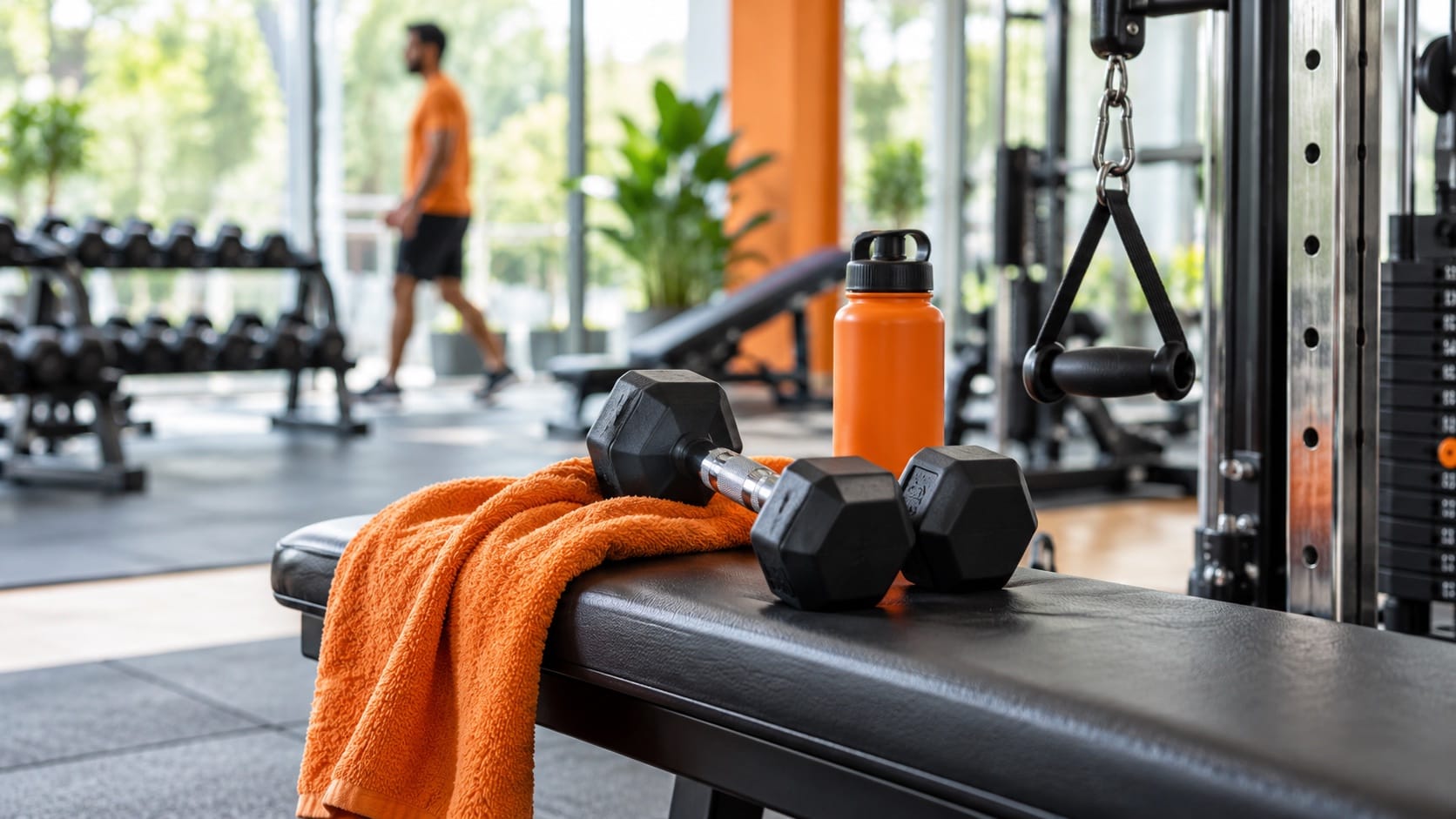
A beginner plan can include compound and isolation exercises. Compound exercises move through more than one joint; isolation exercises concentrate movement at one main joint. Neither label tells you whether an exercise suits your current ability, whether its setup is comfortable, or how much work belongs in your session.
Choose a purpose before choosing a category. A short exercise list that covers your goals and can be repeated is more useful than a rule that bans every curl or requires every beginner to learn a barbell lift immediately. This guide explains the categories and how to discuss them with the person helping you train.
What the two labels actually mean
ACE's explanation of compound exercises distinguishes multi-joint movements from single-joint isolation work. A squat involves movement at the hips and knees, while a biceps curl mainly involves bending and straightening the elbow. Several muscles can still contribute to stabilising an isolation exercise; the name does not mean literally one muscle works alone.
| Example | Usual category | What to notice |
|---|---|---|
| Squat or leg press | Compound | Hip and knee movement contribute to the task. |
| Chest press | Compound | The shoulders and elbows participate in pressing. |
| Row or pulldown | Compound | The shoulder region and elbows participate in pulling. |
| Biceps curl | Isolation | The elbow is the main moving joint. |
| Leg extension | Isolation | The knee is the main moving joint. |
These are category examples, not an exercise prescription. You do not need to perform everything in the table. A movement can have several versions, and learning one version does not automatically prepare you for every other one.
Compound does not mean free weights
A leg press and many seated chest presses are compound exercises even though they are machines. A dumbbell curl is isolation work even though it uses a free weight. Bodyweight exercises can also be compound: a push-up is not an isolation exercise simply because there is no weight stack.
Keep two separate questions on your plan: what role does this movement serve, and which tool makes that role practical for me? The machines-versus-free-weights comparison addresses the equipment question. It should not be used as a synonym for compound versus isolation.
This distinction helps when a gym is busy. If your usual chest press is occupied, a curl is not a replacement just because both are upper-body exercises. Ask for an already-taught alternative that serves the intended role, with its own appropriate setup and resistance.
Why a beginner might use compound movements
The practical attraction is coverage. A pressing movement can involve several upper-body areas, and a lower-body movement can cover more than one joint action. That may help keep a plan manageable when your available gym time is limited.
Coverage is not permission to skip learning. The full exercise includes getting into position, moving, ending the set and putting equipment away. A movement that uses several joints may also give you several things to coordinate. Ask which version you can practise reliably now rather than which version looks most impressive.
A useful goal statement might be: 'I want a balanced routine I can finish before work.' Another might be: 'I want to learn a particular lift.' Those goals can lead to different exercise choices even when both plans contain compound movements. The label alone cannot resolve the choice.
When isolation work can have a clear job
Isolation work can be an intentional addition for an area you want to train directly, an exercise you enjoy, or a part of a goal-specific plan. Its value should be explained in the context of the rest of the routine, rather than defended with a claim that everybody needs it.
For example, if your plan already contains pulling exercises and then adds curls, ask what the curls contribute and how much additional work is intended. Conversely, if you enjoy curls and there is room for them without losing planned lower-body training, the fact that they are isolation work is not a reason to remove them automatically.
Do not turn this into a self-diagnosis. Difficulty finishing a press does not prove that one particular muscle is weak, and an isolation exercise is not automatically treatment for pain. Those are different questions requiring appropriate assessment.
Audit the exercise list, not just the names
Consider this illustrative draft: chest press, another chest press, shoulder press, biceps curl and two triceps exercises. Calling it compound-focused does not explain the selection. Marking the actual roles reveals where the draft repeats work and where it leaves gaps.
| Draft entry | Category and main role | What the comparison reveals |
|---|---|---|
| Chest press | Compound; upper-body pressing. | One broad pressing task is present. |
| Second chest press | Compound; another upper-body press. | Check what its different version adds, rather than counting it as new coverage automatically. |
| Shoulder press | Compound; a different pressing direction. | Not identical to a chest press, but still another press rather than pulling or lower-body work. |
| Biceps curl | Isolation; direct elbow-flexion work. | Direct arm work is present; it does not replace the missing pulling task. |
| Two triceps exercises | Isolation; repeated direct elbow-extension work. | Ask why two versions are included, especially alongside several presses. |
| No pulling or lower-body entry | Coverage gap in this draft. | Neither more presses nor more arm exercises fills it. |
Overlap is not automatically an error. Two presses might be chosen deliberately for different goals. Equally, a curl is not redundant just because another exercise also involves the arms. The useful distinction is between a repeated role with a stated reason and repetition that entered the list without a reason.
Do not count a compound exercise as a full separate dose for every muscle that participates, then use that arithmetic to decide exactly how much isolation work to add. The category shows the movement's structure; it does not tell you the training contribution of each set or supply an individual workload.
The immediate correction is to address the gaps and explain the repeated roles before lengthening the session. That could mean replacing an unnecessary duplicate rather than adding another long group of exercises. It is not a compulsory programme or a rule that one pressing exercise is always enough.
The weekly arrangement is a separate choice: full-body versus split workouts concerns when training appears in your week, not whether a curl and a press do the same job.
Do not confuse more exercises with a better plan
ACSM's March 2026 resistance-training update prioritises consistent participation and individualisation rather than one compulsory equipment route. That supports discussing a manageable plan, not inventing a universal compound-to-isolation ratio.
The sets-and-repetitions guide helps you read the amount of work already written down. Do not count a list of six exercise names as six equivalent units of training.
Make the category distinction useful
If time is limited, prioritise the roles that would otherwise disappear, rather than choosing by the compound label alone. An extra compound press does not fill a missing pulling role, and keeping a useful isolation exercise need not prevent a balanced routine.
Mayo Clinic's current strength-training guidance recommends qualified instruction for beginners and stopping an exercise that causes pain. Persistent or recurring pain needs healthcare advice, not a switch between categories as self-treatment.
For equipment access, compare the Fit Square gym directory and eligible partner options in the Fit Square app; confirm the equipment and any paid coaching separately.
References
- ACE: compound-exercise definitions
- ACSM: 2026 resistance-training update
- Mayo Clinic: getting started with strength training
Common questions
Should beginners avoid isolation exercises?
No blanket ban is needed. Ask what the exercise adds and whether it fits the rest of your plan.
Are all machine exercises isolation exercises?
No. Many machine presses and rows involve movement at several joints.
Is there an ideal compound-to-isolation ratio?
Not a universal one. Goals, exercise coverage, available time and the amount of work all matter.
Can I replace a compound exercise with any isolation exercise?
Not automatically. Match the intended task and obtain instruction for the replacement rather than choosing by body-part label alone.