
What to Wear to the Gym for the First Time: A Practical Checklist
Your first gym outfit needs to work when you move, not just when you stand in front of a mirror. Use a simple fit check for tops, bottoms, footwear and support, then confirm the venue's rules before buying anything new.
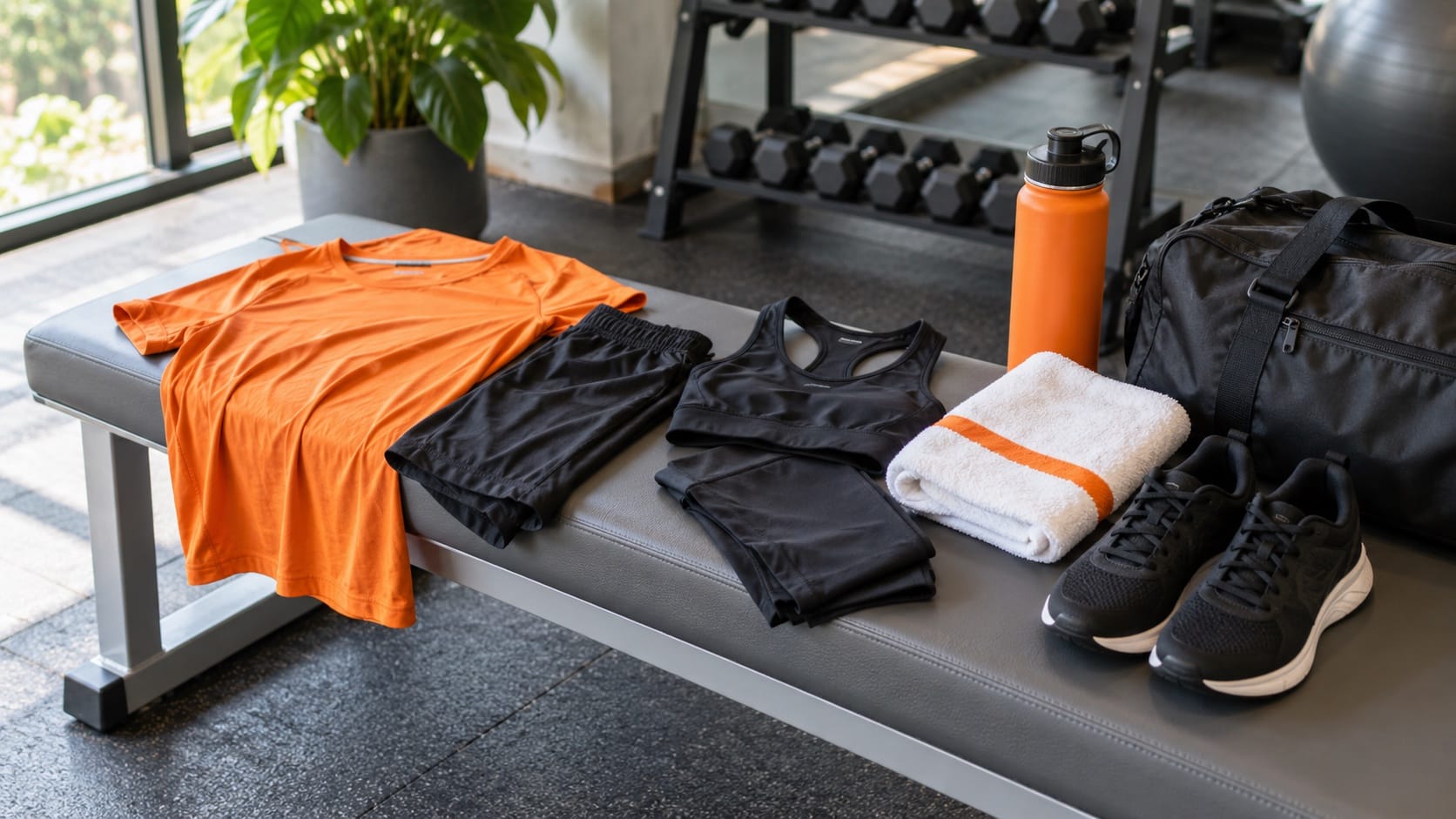
For your first gym visit, wear clothing that lets you move comfortably, covers you as you prefer and does not get in the way of equipment. Add footwear suitable for the activities you expect to do and the gym's rules. You do not need a new matching set or an expensive brand to look like you belong.
The useful test happens while sitting, reaching and walking, not only while standing still. Start with clothes you already own, check them at home and ask the venue about any specific requirements. The first-day gym guide covers the wider visit; here the focus is what you wear.
Choose for the visit you actually have planned
An orientation with easy movement, a treadmill run and a supervised weights session may put different demands on an outfit. Ask what your first appointment includes so that you are not buying clothes for an activity you will not do.
MedlinePlus recommends considering fabric, fit and the activity, with clothing that allows movement and cannot catch on equipment. That does not mean everyone must wear tight clothing. The aim is a workable fit, not one compulsory silhouette.
Men and women can use the same basic checklist. Differences in support, coverage and personal preference can be addressed within it. Avoid choosing sizes or styles to hide a body that supposedly needs to change before it can enter the gym.
Do a short movement check at home
Check the outfit in motion. Walk a few steps, sit on a chair, reach your arms comfortably and bend only within your usual comfortable range. These are clothing checks, not an exercise screening test or a request to practise unfamiliar lifting technique.
| Item | What to notice | A practical adjustment |
|---|---|---|
| Top | Does it restrict reaching or shift in a way you dislike? | Try a different cut or a comfortable base layer |
| Waistband | Does it dig in when sitting or need constant pulling up? | Choose a secure fit that remains comfortable seated |
| Bottoms | Do seams pull or fabric drag around the feet? | Adjust the length or choose another pair |
| Coverage | Are you comfortable with the outfit during ordinary movement? | Try the combination together, including any layers |
| Pockets and cords | Will items fall out or loose parts hang near moving equipment? | Store valuables and secure dangling parts |
| Footwear | Do your heel and toes feel comfortable while walking? | Recheck fit with the socks you will use |
If you keep adjusting one item during this check, it may distract you during the visit too. Change the item rather than planning to tolerate it for the sake of appearance. A second comfortable option in the bag can be more useful than an elaborate first outfit.
Keep the top and bottoms simple
A comfortable T-shirt with suitable shorts, track pants or leggings can work, subject to the venue's rules and planned activity. A sleeveless top is a preference, not a fitness requirement. Long sleeves are also a preference when they allow movement and are practical for the environment.
Check trousers or leggings while seated because benches and machines can change how waistbands and seams feel. Check shorts in the same way. If coverage changes when you sit, choose a length, lining or layer that you are comfortable using. This is your comfort decision, not a standard imposed on a particular gender.
Avoid stiff everyday clothing when it prevents the movement you need. Be cautious about loose cuffs, long hanging cords and bulky objects in pockets near moving parts. Ask the instructor about the actual equipment rather than assuming a general clothing label makes it suitable everywhere.
Think about fabric without turning it into a shopping project
Consider how the fabric feels against your skin, how warm the gym is and what happens when the garment gets damp. Quick-drying materials can be convenient, but you do not need to replace every ordinary T-shirt before a gentle first visit.
AAOS's safe-exercise advice favours comfortable clothing that permits movement and is appropriate for body heat. It does not provide a reason to wear extra layers to make yourself sweat more. Sweat is not a score for the quality of a workout.
For a commute in different weather from the gym, use an easily removable outer layer. Keep it in the place the venue recommends rather than on equipment. If the gym is hot or the garment becomes uncomfortable, change the arrangement instead of treating discomfort as part of the exercise.
Support should fit, not demand constant attention
If breast support is relevant to you, choose an option suited to the activity and comfortable through movement. Check whether the band stays in place and whether the straps or seams dig in. A familiar everyday bra may feel different when running, reaching or leaning.
The Gateshead Health NHS trust's bra-fitting advice describes comfortable support without digging in or limiting movement. A fitting service can help when you are uncertain, but a product description is not a diagnosis or a promise that pain will disappear.
Anyone can consider underwear comfort, seams and support for their intended activity. Avoid items that repeatedly shift or pinch during the at-home check. Persistent pain or skin symptoms need appropriate advice rather than simply a tighter garment.
Choose shoes after identifying the activity
Ask whether the first visit includes treadmill work, resistance training or a class. Check that shoes fit with your actual socks, fasten securely and have soles suitable for the venue. Slippers or open footwear may not be allowed on the gym floor; confirm rather than assuming.
Do not buy the most technical-looking shoe just because it is marketed as a gym shoe. Footwear designed for running and footwear used for varied training can serve different tasks. For now, ask the instructor whether your existing pair is appropriate for the appointment.
If you are still worried about arriving in the wrong thing, arrange the orientation first and ask about shoes while booking it. You can make a more informed purchase after understanding the activities you will actually do. The venue choice itself should also fit your routine, as explained in the routine-first gym guide.
Check accessories and cultural preferences with the venue
Secure long hair in a way that works for the equipment. Ask about jewellery, watches, head coverings and any garment with loose ends. Comfortable religious or modest clothing can be discussed as a practical setup question, without pressuring you to change your identity or preferred coverage.
Bring up changing-room needs before you arrive. Ask whether lockers are available, what lock is needed and where bags should go. Do not assume that a listed gym has the same rules or amenities as another location.
Keep a small checklist: outfit checked, suitable shoes and socks, a clean towel if required, water bottle, and a change of clothes if useful for the journey home. The comfortable-gym guide can help you assess staff communication as well as facilities.
Confirm first, then buy only what is missing
You can compare venues in the Fit Square gym directory. Ask the selected gym about footwear and clothing rules, instructor availability and changing facilities. Use the Fit Square app to check eligible access, not as a substitute for venue-specific answers.
Once you know the actual visit, buy only an item that solves a clear problem. A first gym outfit is complete when it lets you focus on the appointment rather than repeatedly adjusting clothes. It does not need to look like a fitness advertisement.
Sources
- MedlinePlus: exercise clothing and shoes.
- AAOS: appropriate clothing for exercise.
- Gateshead Health: comfortable bra fitting and support.
Questions about first-visit gym clothing
Do I need to buy gym clothes before joining?
Not necessarily. Check what you already own against the planned activity and venue rules.
Are leggings or sleeveless tops compulsory?
No. Choose a comfortable fit and preferred coverage that work with the activity and gym requirements.
Should I wear extra layers to sweat more?
No. Choose for comfort and the environment; more sweat does not prove a better workout.
What if I wear a head covering or modest clothing?
Ask staff how to keep the outfit practical around equipment and confirm any venue-specific rules before the visit.