
What to Eat After a Workout: Simple Indian Meal Options
Let a normal Indian meal do the job after your workout. Compare morning, after-office and delayed-dinner situations, choose a practical bridge snack when needed and avoid treating recovery as a compulsory shake or thirty-minute race.
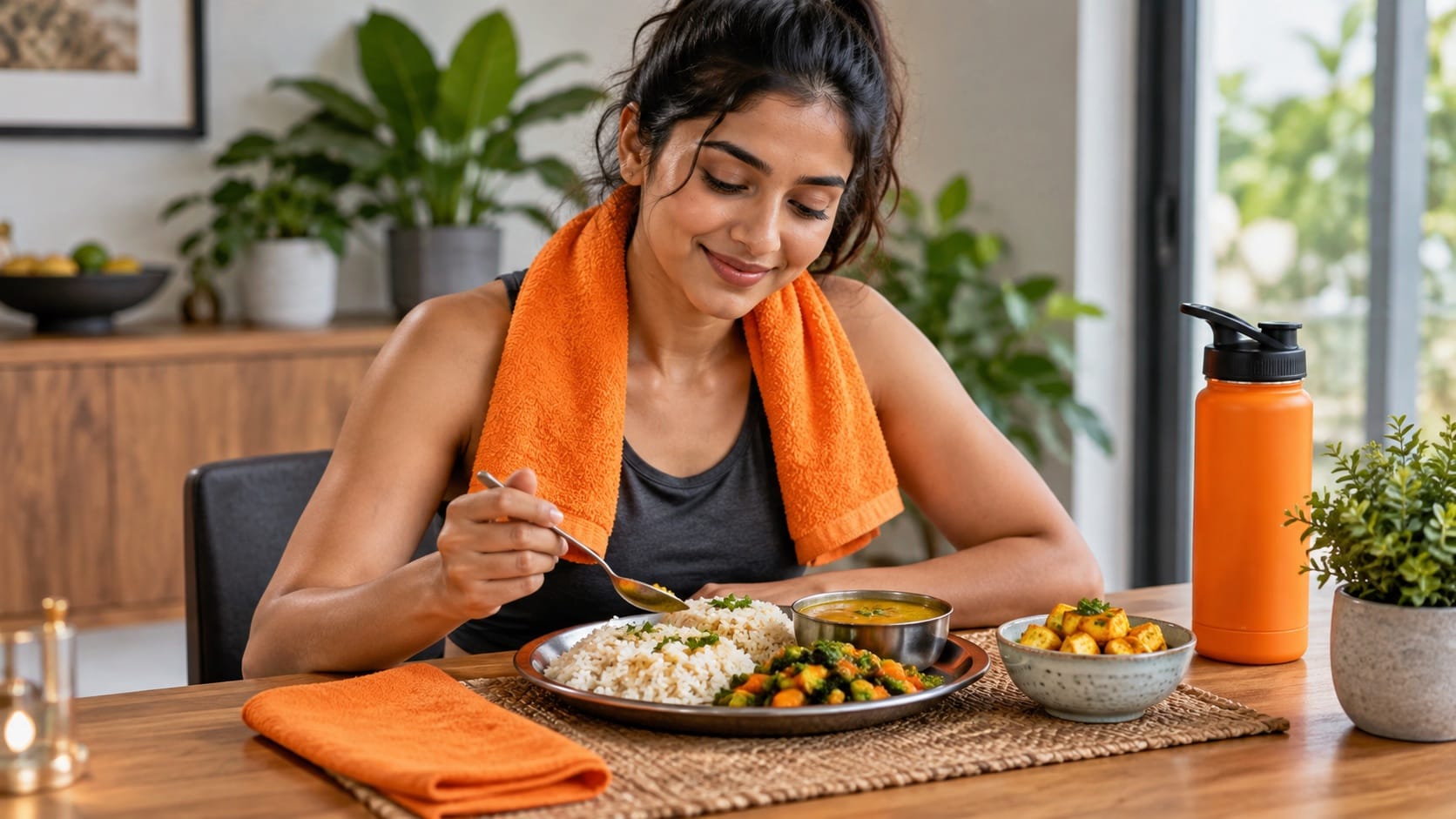
After an ordinary beginner workout, a normal Indian meal can serve as your recovery meal. Think rice or roti with dal, beans, paneer, tofu, eggs or another protein-containing food, alongside vegetables and fluids. You do not automatically need a shake followed by a separate dinner, and your workout is not wasted if you cannot eat within thirty minutes.
The practical question is what happens between finishing exercise and your next meal. Is breakfast waiting at home, is dinner several hours away, or are you travelling without refrigeration? Answering that question usually makes the food decision much simpler.
Recovery is more than a protein drink
Protein contributes to tissue repair and adaptation, carbohydrate helps replenish fuel used during exercise, and fluids replace losses. These roles do not mean every workout needs a special sports product. Mayo Clinic suggests a meal containing carbohydrate and protein after exercise, with a snack if a meal is some time away.
That advice fits ordinary dishes: dal-rice supplies carbohydrate and protein; an egg-and-roti meal does too. Vegetables, fruit and other foods still belong in the wider diet. A meal made only to maximise one protein number may miss what makes it satisfying, varied and practical.
For amounts from particular foods, use our real-portion vegetarian protein comparison. There is no universal recovery portion in this article. Your exercise, appetite, other meals and any medical advice influence what is appropriate.
Use the next meal, or bridge the gap
| Situation | Practical response | What to check |
|---|---|---|
| Dinner is ready after your evening gym visit | Let dinner be the recovery meal | It includes a meaningful protein food and a carbohydrate component |
| A long journey or meeting delays dinner | Carry a suitable snack and eat the normal meal later | Safe storage, actual portion and whether the snack suits your appetite |
| An early session ends near breakfast | Build protein into the breakfast you normally eat | Breakfast is not only tea or a token garnish |
| Another demanding session follows soon | Get tailored sports-nutrition planning | This is a different recovery problem from two or three ordinary gym visits a week |
A bridge snack is a response to a gap, not a compulsory extra meal. Conversely, skipping needed food to avoid eating after exercise is not a recovery strategy. Work with the schedule you have rather than interpreting every option as something to add on top of everything else.
After-office dinner without a second menu
If you train after work and eat at home afterwards, start with what your household cooks. Rice, dal and a cooked vegetable can be a workable base. If the dal is very dilute or the serving is tiny, consider a more substantial pulse serving or another protein-containing accompaniment. That is a meal-composition decision, not a demand to eliminate rice.
Other combinations include roti with chana and vegetables; paneer bhurji with roti; tofu with rice and vegetables; or eggs with roti and a vegetable dish. If you eat meat or fish, those can occupy the protein role as part of an otherwise familiar meal. Choose food you can prepare, tolerate and afford.
The ICMR-NIN dietary-guidelines booklet supports varied food choices. The examples here apply that idea to scheduling, rather than prescribe the booklet's quantities to an individual.
Do not assume all dishes with the same name have identical nutrition. A bowl of thin dal and a thick dal preparation differ; paneer curry includes gravy and oil as well as paneer. If you need an estimate, account for the recipe instead of copying a generic app entry. You can make a sensible meal without attaching an exact number to it.
Morning training followed by breakfast
Plan breakfast before you leave for the gym so returning hungry does not create a new cooking problem. Moong chilla with an appropriate accompaniment, eggs with roti, or a labelled curd/milk-based breakfast can work. A poha or idli breakfast can remain familiar while a suitable accompaniment adds a clearer protein component.
If you had some food before training, that also belongs to the day's intake. You do not need to restart the day nutritionally after the session. Use the pre-workout food guide to decide what is comfortable beforehand, and make the post-session meal fit around it.
Leave time to eat before a commute or first meeting. A theoretically perfect breakfast is of limited use if it requires half an hour you never have. Keeping a simple reliable option available is a practical improvement, even when it is not the most elaborate recipe.
What to carry when dinner is delayed
Choose a snack that includes useful food rather than only a sugary drink. Depending on dietary preferences and storage, options might include fruit with a labelled milk drink; curd with a cereal food; a safely chilled egg or paneer sandwich; or roasted pulses alongside another carbohydrate-containing food. These are examples, not equal-protein swaps.
Check packet instructions. Shelf-stable milk is shelf-stable only under the conditions stated, usually while unopened; curd, eggs and dairy fillings require appropriate storage. A warm commuter bag is not a refrigerator. If safe chilling is unavailable, choose foods designed for that storage situation or buy a freshly prepared suitable option later.
For a packaged snack, the nutrition-label guide helps distinguish the advertised serving from the whole pack. A snack can be useful without being sold as a recovery bar. Compare what you will eat, its ingredients and the actual gap it solves.
Late-evening food and leftovers
Eating after a late session is not automatically a mistake. Avoid a universal rule that says everyone must finish dinner at the same clock time. Consider whether moving the workout slightly earlier, preparing food ahead or splitting your usual eating arrangement would make the evening more comfortable. Persistent reflux or digestive symptoms need appropriate medical advice.
If dinner depends on leftover rice, follow NHS rice-storage instructions: cool and refrigerate it within one hour of cooking, eat it within 24 hours, and reheat it only once after safe chilling, until steaming hot throughout. Reheating cannot undo unsafe storage.
A substantial, very rich meal immediately before bed may not suit your comfort, but that does not justify deliberately going hungry after a day of inadequate eating. Choose a familiar tolerable meal and seek tailored advice if recurring symptoms make the schedule difficult.
Why there is no compulsory thirty-minute window
The Australian Institute of Sport discusses protein intake across the day and the extended response to exercise. That is inconsistent with treating thirty minutes as a deadline after which food no longer helps. Timing can matter, particularly in demanding training schedules, but it is not a switch that turns recovery off.
For beginners, arrange reliable meals rather than panic-buying a shake at the gym exit. The AIS discussion of mixed sports foods also distinguishes convenience in particular situations from needing them at every session.
Do not diagnose shaking, dizziness or weakness as proof you need a particular recovery product. Stop exercising if unwell and seek appropriate assessment for persistent or recurring symptoms. People taking glucose-lowering medicines should follow their care team's exercise and food plan rather than this general guide.
Make the routine easier to repeat
Keep one answer to each question: what meal comes next, what happens if it is delayed, and how will the food be stored? Then observe whether the arrangement is comfortable and practical. Hydration is a separate consideration; see our workout-water guide rather than treating a protein drink as a complete fluid plan.
If the journey home repeatedly delays dinner, compare convenient locations in the Fit Square gym directory. Use the Fit Square app to check eligible gym access and plan the visit. Access arrangements do not replace nutrition or medical advice.
References
Mayo Clinic; ICMR-NIN; AIS protein; AIS sports foods; NHS rice safety.
After-workout questions
Can dinner be my post-workout meal?
Yes. A suitable normal dinner can serve that role; it need not be followed or preceded by an automatic recovery shake.
Do I lose my gains if I miss thirty minutes?
No. Recovery is not confined to that deadline. Prioritise an appropriate overall diet and reliable meal opportunities.
Is a banana enough by itself?
It can be part of a snack, but it is not a substantial protein food or a complete replacement for a varied meal.
Does every workout need an extra snack?
No. A snack can bridge a genuine gap. If a suitable meal is coming soon, it may already meet that practical need.