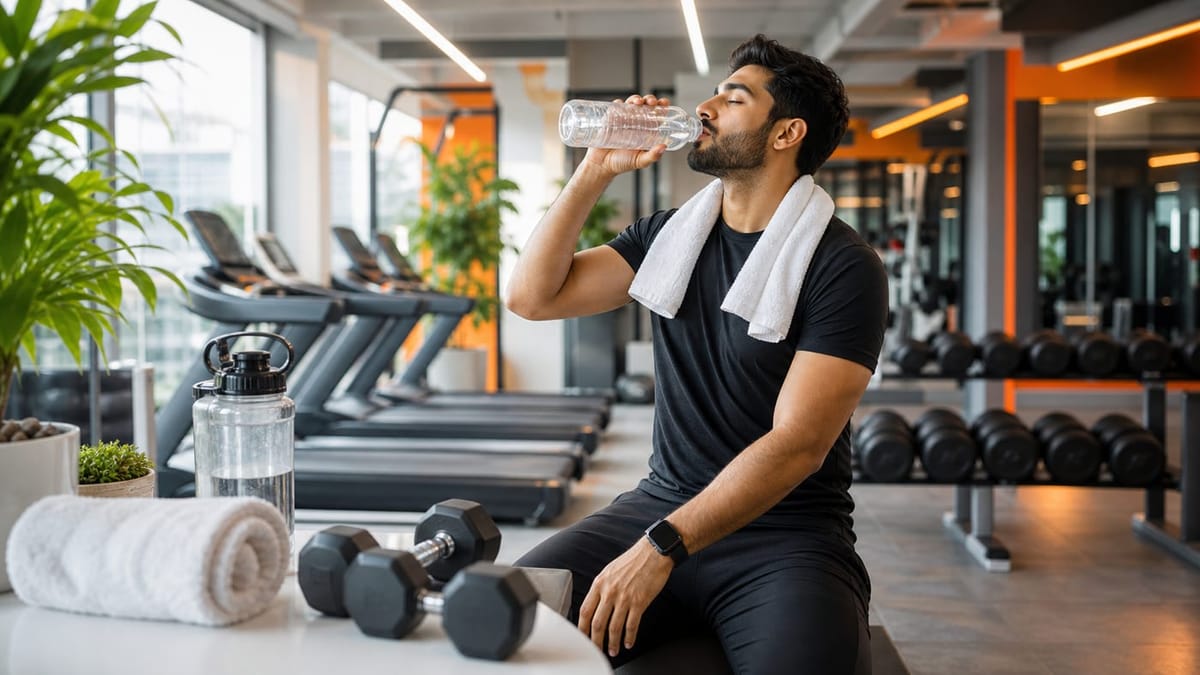
How Much Water Should You Drink Daily If You Work Out?
A practical hydration guide for people who work out, with safe examples and source-backed cautions.
Short answer: There is no single perfect water number for everyone. Your needs change with body size, sweat, heat, workout intensity, food and health conditions. A practical approach is to drink regularly through the day, add water around workouts, and use urine color, thirst and how you feel as basic signals.
Hydration advice online often becomes extreme: either a fixed number for everyone or a warning to drink constantly. Neither is useful. People who train in Indian heat, travel long distances or work out in non-air-conditioned spaces may need more fluid than they do on rest days.
This guide is for general fitness planning, not medical advice. If you have kidney, heart or liver disease, are on fluid-related medication, or have been told to restrict fluids, follow your clinician's guidance.
Reviewed for Fit Square: July 2026. This guide is for general fitness planning and gym selection, not medical advice. If you have an injury, chronic condition, pregnancy-related concern, chest pain, dizziness, severe pain, or a doctor-given restriction, speak with a qualified professional before changing your routine.
| Situation | Hydration move | Why it helps |
|---|---|---|
| Before workout | Drink some water in the hours before training | You start the session without feeling heavy or dry |
| During workout | Sip as needed, especially in heat or longer sessions | Replaces some sweat without forcing intake |
| After workout | Drink with your meal or snack | Supports recovery and normal daily fluid balance |
| High sweat day | Consider electrolytes if training is long or very sweaty | Water alone may not replace all sodium losses |
Why fixed water rules fail
A person doing a light 30-minute session in an air-conditioned gym does not have the same fluid need as someone training hard after a long commute in humid weather. Mayo Clinic notes that water needs vary with exercise, environment, overall health and pregnancy or breastfeeding status.
That is why a fixed rule can be both too little for one person and too much for another. The better rule is to build a hydration routine and adjust it around sweat and conditions.
Simple signals most beginners can use
Thirst is not useless. It is one signal, especially during normal daily life. Urine that is pale yellow is often a practical sign that hydration is in a reasonable range, while very dark urine may suggest you need more fluids. But do not use color alone if supplements, medicines or medical issues affect it.
During workouts, pay attention to headache, dizziness, unusual fatigue, dry mouth or cramping. These can have many causes, but they are signs to slow down and check your fluid, food and recovery.
- Drink with meals and between meals.
- Carry a bottle when commuting to the gym.
- Sip during training instead of waiting until you feel very dry.
- Do not force very large amounts of water quickly.
What to do before, during and after training
Before a workout, avoid arriving dehydrated. Drink water normally through the day and have some fluid in the hour or two before training. During a short workout, sipping is enough for many people. During longer or hotter sessions, you may need more.
After training, pair water with food. A normal meal or snack helps replace fluid and nutrients. If your clothes are soaked with sweat or the workout was long, an electrolyte drink may be useful, but it is not required for every gym session.
Hydration mistakes that hurt consistency
The first mistake is drinking almost nothing all day and then trying to compensate right before the gym. That can leave you uncomfortable during training. The second mistake is copying extreme routines from influencers who do not know your climate, body or health background.
A third mistake is ignoring sleep and food. Hydration supports performance, but low energy, poor recovery and skipped meals can also make workouts feel bad.
Fit Square angle: make the workout easier to repeat
Hydration is part of reducing friction. Keep a bottle in your gym bag, choose gyms that are easy to reach, and avoid making the first few sessions feel like a punishment. If the environment feels comfortable, you are more likely to return.
Use Fit Square to compare nearby gyms, then build a small routine around travel, water, food and workout timing. That routine matters more than chasing a perfect water formula.
How to use this guide in the next 30 days
Use this article as a decision tool for one month, not as a rule to memorize once. The first week should be about observation: where your workouts actually fit, which time of day feels realistic, and which parts of why fixed water rules fail matter in daily life. If the plan only works on a perfect day, adjust it before spending more money or adding more pressure.
In the second week, make one small change instead of changing everything. That could mean choosing a closer gym, making the workout shorter, moving the session before dinner, adding a protein source to meals, or using a lighter recovery day. A small change that improves attendance is more valuable than a dramatic plan that disappears after two attempts.
By the third week, look for patterns. If you keep missing workouts because of distance, the issue is location. If you keep feeling tired, the issue may be recovery, food or workout intensity. If you keep delaying because the plan feels confusing, simplify it. This is where simple signals most beginners can use becomes practical rather than theoretical.
At the end of 30 days, judge the decision by evidence: completed workouts, comfort, recovery, cost per used workout and whether the habit feels easier than it did at the start. Do not judge only by motivation on day one. Fitness decisions become clearer after a few real check-ins.
What to compare before you act
A good answer should change what you do next. Before choosing a plan, workout style or gym, compare the practical signals below. They keep the decision grounded in real life instead of generic advice.
- Before workout: Drink some water in the hours before training You start the session without feeling heavy or dry
- During workout: Sip as needed, especially in heat or longer sessions Replaces some sweat without forcing intake
- After workout: Drink with your meal or snack Supports recovery and normal daily fluid balance
- High sweat day: Consider electrolytes if training is long or very sweaty Water alone may not replace all sodium losses
Also compare the cost of inaction. If you delay because the perfect option is unclear, you may lose another month of movement. A good-enough first step is often better than a perfect plan that never starts. For Fit Square users, that usually means shortlisting a realistic gym, starting with flexible access where needed, and learning from actual usage.
Common ways this decision goes wrong
The first mistake is treating the topic as a one-time answer instead of a routine decision. A person may know the right answer to "How Much Water Should You Drink Daily If You Work Out?" and still fail because the surrounding setup is weak: the gym is too far, meals are mistimed, recovery is ignored, or the access plan does not match real attendance.
The second mistake is copying someone else's context. A student, office commuter, beginner, frequent traveler and experienced lifter may all need different versions of the same advice. Use the article to narrow the decision, then test it against your own week. If your actual behavior disagrees with the plan, adjust the plan rather than blaming yourself.
- Do not choose based only on the most motivated version of yourself.
- Do not ignore distance, timing, recovery, food, sleep or comfort.
- Do not pay for a long plan until the first few workouts prove the routine is usable.
- Do not turn a simple fitness question into a reason to postpone starting.
What to track after reading this
Track a small set of signals for two to four weeks: workouts completed, skipped-workout reasons, energy during sessions, soreness or recovery, and money spent per used workout if access is part of the decision. These signals make the next choice more accurate than another generic search result.
If the data is mixed, simplify. Keep the workouts shorter, choose a closer gym, reduce intensity, or switch to a more flexible access model. Better fitness planning usually comes from removing friction before adding complexity.
Local Fit Square checklist
If this topic connects to gym access, start with location. The strongest fitness plan still fails when the gym is on the wrong route. Use Explore gyms near you on Fit Square to compare gyms by locality, timing and access type before committing.
Next, connect the article to one related decision. For example, a hydration or meal-timing question affects when you train. A membership or pass question affects how much you pay for unused days. A soreness or protein question affects recovery. The goal is to make the next workout easier, not to collect more information.
If you are still comparing options, read First day at the gym: what to do, carry and avoid and Your first month at the gym: consistency plan before paying for a long plan. These guides cover the surrounding decisions that usually decide whether a person continues.
Finally, choose one action for this week: book a workout, shortlist two gyms, plan two walking days, prepare one pre-workout snack, or reduce workout intensity enough to recover. One completed action is more useful than another saved article.
For a practical next step, keep Download the Fit Square app open while comparing your options. It keeps the decision connected to real gyms and real access instead of only theory.
Useful Fit Square pages
Related Fit Square guides
- First day at the gym: what to do, carry and avoid
- Your first month at the gym: consistency plan
- How many days a week should a beginner go to the gym?
Helpful sources
Quick answers
Should I drink water during gym?
Yes, sip as needed. For most short workouts, small sips are enough.
Can too much water be a problem?
Yes, forcing excessive water can be unsafe. People with medical conditions should follow professional advice.
Do I need electrolytes every workout?
No. They are more useful for long, hot or very sweaty sessions.
Is thirst enough to guide water intake?
Thirst is useful, but also consider workout intensity, heat, sweat and how you feel.
Think of hydration as a daily habit, not a gym-day panic fix. Drink regularly, adjust for sweat and avoid extreme rules.