
High-Protein Indian Breakfasts for Gym Beginners
Keep familiar breakfasts and give protein-containing foods a clear place in the meal. Three illustrative preparations show the ingredients, approximate protein and energy, with practical alternatives for vegetarian, egg-eating and time-pressed mornings without setting a compulsory breakfast target.
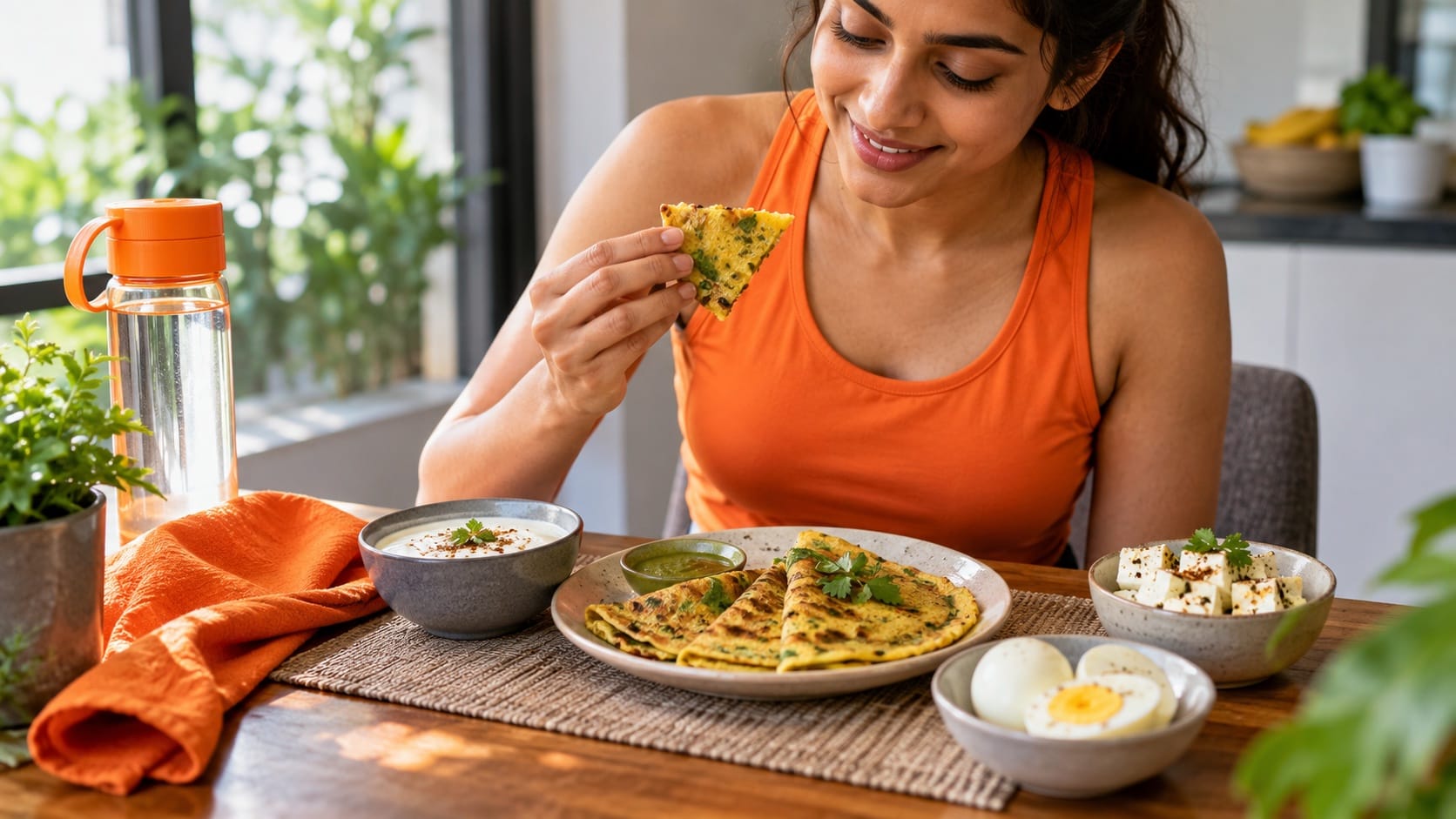
A useful higher-protein Indian breakfast usually starts with an ordinary meal and gives a protein-containing ingredient a clear role: moong in chilla, paneer in a roti filling, eggs alongside a cereal food, or a substantial curd serving rather than a garnish. You do not need a compulsory breakfast protein target, an expensive powder or a completely different menu because you joined a gym.
Choose the option you can repeat on your actual morning. The examples below show ingredients and approximate calculations, not a prescribed meal size or a promise of muscle growth. For other food choices, see vegetarian protein foods compared by real portions.
What the recipe numbers mean
The calculations use the ICMR-NIN Indian Food Composition Tables. Dry pulses and flour are weighed before soaking or cooking; paneer is weighed before making the filling; boiled eggs are weighed without shells. Kilojoules are divided by 4.184 to obtain kcal. Oil is estimated at 9 kcal per gram.
These are ingredient-sum estimates, not recipes tested in a laboratory or kitchen. Cooking losses, batter left in the blender, actual oil retained and ingredient differences all affect the food eaten. Small optional spices are not calculated; any chutney, drink, fruit or additional topping must be considered separately. The numbers describe the specified preparation, not all breakfasts with the same name.
Three breakfast bases, with the maths visible
| Breakfast base | Specified ingredients | Approximate protein | Approximate energy |
|---|---|---|---|
| Moong-and-paneer chilla | 50 g dry split moong, 50 g paneer, 25 g peeled onion, 5 g oil | 21.7 g | 373 kcal |
| Paneer roti roll | 60 g dry atta, 75 g paneer, 50 g peeled onion, 5 g oil | 21.2 g | 490 kcal |
| Boiled eggs with plain rotis | 100 g edible boiled poultry egg, 60 g dry atta made into rotis, no added oil | 19.8 g | 340 kcal |
Every ingredient quantity is illustrative. The two atta examples use 60 g flour in total, not 60 g cooked roti. Their cooked size and number depend on how you divide the dough. The egg portion might be roughly two eggs, but egg size varies; the calculation is for 100 g edible boiled egg, not an assumed universal egg count.
Moong chilla when you can prepare ahead
For the example, weigh 50 g dry split moong before soaking. Soak hygienically, drain, and blend with enough fresh water to make spreadable batter. Stir in the chopped onion and seasonings you normally use. Cook the batter as chillas until fully cooked, using the measured oil across the preparation. Add the paneer as a filling or serve it separately.
The protein components are approximately 11.94 g from moong, 9.43 g from paneer and 0.38 g from onion: about 21.7 g altogether. Energy is about 163 kcal from moong, 153 from paneer, 12 from onion and 45 from oil: approximately 373 kcal. Water changes batter weight but does not add protein.
For a dairy-free version, omit the paneer or use a suitable tofu. Without paneer, the specified moong, onion and oil contribute about 12.3 g protein and 220 kcal. Adding tofu changes those values according to the product label; it is not a gram-for-gram nutritional match. Choose sufficient food for your needs rather than treating the smaller figure as a goal.
This option is convenient when the soaking and batter preparation fit your evening. If they do not, choose a different breakfast instead of repeatedly missing the meal while aiming for an elaborate recipe.
A paneer roll for mornings with a commute
Make plain rotis from the specified atta and water, with no additional flour or ghee included in the calculation. Cook onion and crumbled paneer with the measured oil and preferred seasoning, then divide the filling across the rotis. Chutney or vegetables can add flavour and variety; their contributions are outside the base estimate.
The atta contributes about 6.34 g protein and 192 kcal; paneer about 14.15 g and 229 kcal; onion about 0.75 g and 24 kcal. Oil adds approximately 45 kcal but no protein. Together that is about 21.2 g protein and 490 kcal, allowing for rounding.
Paneer composition varies. The IFCT average is not a claim about every low-fat paneer or restaurant bhurji. Use the current packet for packaged paneer and the per-serving label guide if you want to recalculate. A roll bought outside home may also use a different flour quantity, oil, sauces and filling.
For transport, keep perishable fillings appropriately chilled or carry them in suitable temperature-controlled storage. Do not leave a dairy-filled roll in a warm bag all morning merely because it was home-cooked. Preparation convenience includes safe storage, not just whether the roll fits in your hand.
Eggs with familiar accompaniments
If you eat eggs, a boiled-egg breakfast keeps the egg quantity easier to estimate than a café omelette with unknown oil and cheese. The IFCT boiled whole poultry egg entry provides approximately 13.43 g protein and 148 kcal per 100 g edible weight. The specified plain rotis add about 6.34 g protein and 192 kcal.
Add a vegetable accompaniment or fruit you enjoy, with quantities chosen for your appetite and overall diet. The 340 kcal figure is only the egg-and-roti base, not the total energy of that expanded breakfast. If you instead make bhurji, include its oil, vegetables and any milk or cheese when estimating it; do not reuse the boiled-egg total unchanged.
Vegetarian readers who do not eat eggs can use pulse or dairy options. You are not missing a compulsory gym food. The ICMR-NIN dietary-guidelines booklet emphasises food variety and appropriate combinations, not one mandatory breakfast recipe.
Improve the breakfast you already have
If your usual breakfast is poha, upma, idli or dosa, you can keep it. Look at the accompaniment and recipe rather than assuming the dish name tells you its protein content. A substantial sambar serving, curd, eggs, paneer or tofu may fit better than changing the entire meal. Thin sambar and a small chutney spoon are not automatically a substantial protein portion.
For a no-cook choice, pair a labelled plain or strained yoghurt with your usual cereal and fruit. Check the actual yoghurt amount and protein per 100 g; ordinary curd and strained products differ. Likewise, porridge made with water does not have the same protein as porridge made with milk. Nuts are useful additions, but sprinkling a few over breakfast does not make every bowl high in protein.
Choose according to taste, budget, allergies and what you can store. Avoid turning each morning into a requirement to beat yesterday's protein number.
Separate everyday breakfast from pre-workout timing
The meal that suits a leisurely breakfast may feel uncomfortable immediately before lifting. Mayo Clinic's exercise-food guidance notes that portion size and individual tolerance matter. Do not rush a large chilla or paneer meal simply to finish it before training.
Use the pre-workout options guide for that decision. If breakfast comes after an early session, the post-workout meal guide explains how a normal meal can fit. There is no need to add a second full breakfast solely because the first followed exercise.
When choosing a morning venue, compare commute and opening hours in the Fit Square gym directory and confirm eligible access using the Fit Square app. Keep enough time for the meal and safe food preparation; gym access does not include an individual nutrition prescription.
References
ICMR-NIN IFCT ingredient data; ICMR-NIN dietary-guidelines booklet; Mayo Clinic eating and exercise.
Breakfast questions
Must breakfast contain a fixed amount of protein?
No universal breakfast target is prescribed here. Consider the whole day's intake and seek individual advice where necessary.
Are the chilla numbers for dry or soaked moong?
They start with 50 g dry split moong before soaking. The soaked weight cannot be substituted into the same calculation.
Can I keep eating idli or poha?
Yes. Consider a suitable protein-containing accompaniment and the complete meal rather than banning familiar breakfast foods.
Do I need breakfast before every workout?
Timing depends on your routine, tolerance and any medical plan. An everyday breakfast recipe is not an instruction to eat a large meal just before exercise.