
Strength Training for Women: How to Start and What to Ask Your Trainer
You do not need a different coloured workout or permission to enter the weights area. Begin with goals that matter to you, learn equipment with appropriate support and ask your trainer how the plan fits your experience, schedule and circumstances.
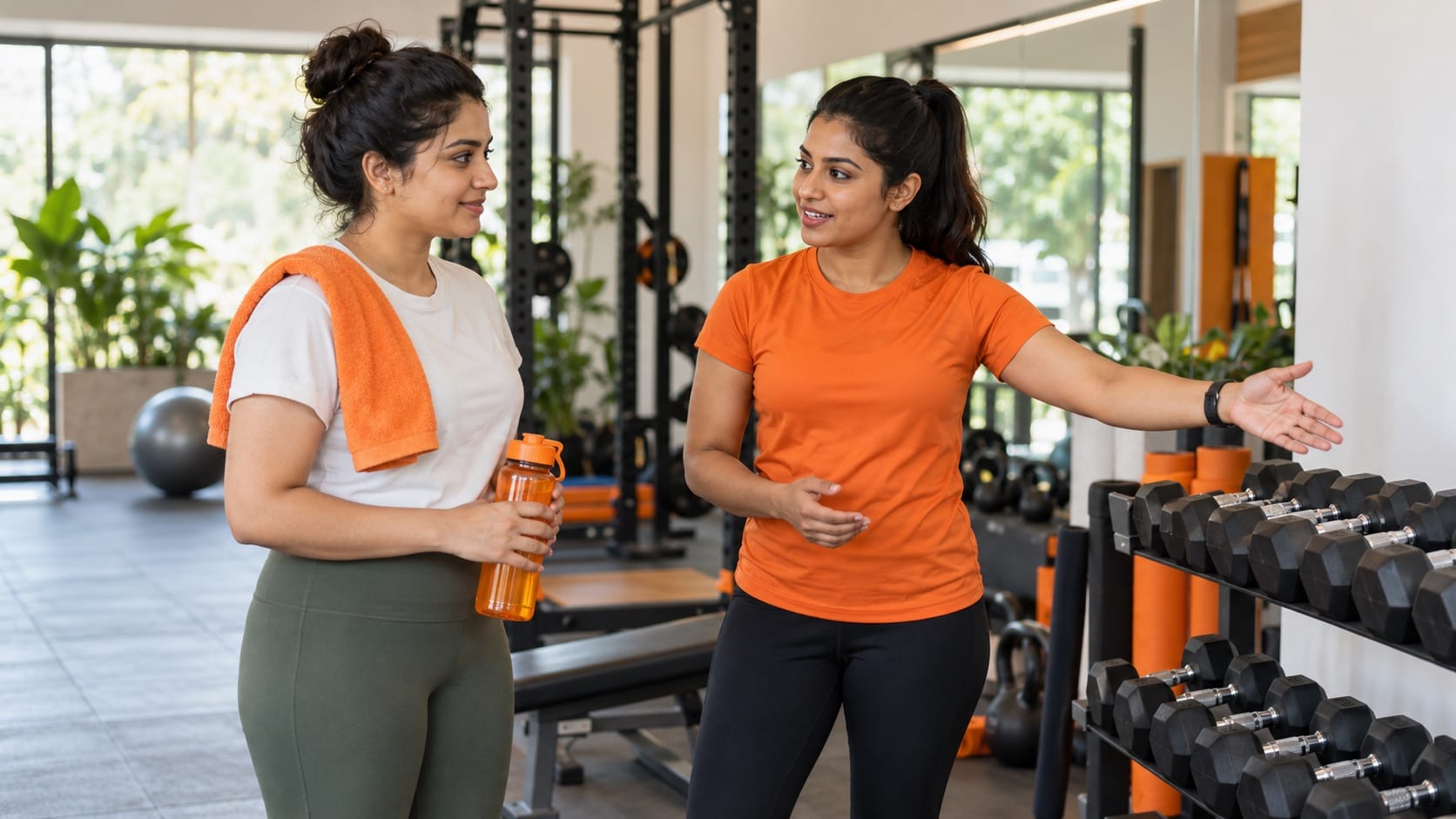
Women can start strength training by learning appropriate resistance exercises, choosing a manageable routine and getting instruction where needed. You do not need a special pink programme, a particular body type or a promise to change your appearance before you can use the weights area.
Begin with what you want the training to help you do. That might be learning a new skill, becoming stronger for daily tasks or enjoying regular gym visits. Your starting experience, preferences and circumstances matter more than a gender-based kilogram chart. If venue comfort is the main concern, use the separate women-friendly gym selection guide.
Make your goal specific without making it about a body deadline
Try writing a goal you can discuss at an induction: I want to understand a simple resistance programme; I want to feel confident asking for equipment help; I want training that fits two available evenings. These are starting conversations, not promises about what a programme will achieve.
Your goal does not have to be a smaller body. If appearance is one of your interests, it can still be discussed honestly without guaranteed measurements, spot reduction or a fixed transformation date. Ask how the trainer will distinguish learning, attendance and exercise performance from appearance-based outcomes.
ACSM's 2026 resistance-training update is for healthy adults and emphasises consistency and a routine matched to the individual. It does not justify assigning every woman the same light weights, or every man a more demanding version of the programme.
Discuss the fear of becoming bulky without a false promise
A good answer should not dismiss your concern or guarantee that resistance training will never change your muscle size. Strength and muscle growth are related training outcomes, but what you want to pursue is a legitimate conversation about the programme, not a reason to avoid learning.
Ask the trainer to describe the purpose of the current plan. Is the first priority understanding technique, developing a general routine or pursuing a particular strength goal? What information will they use to adjust it? A clear explanation is more useful than reassurance based on stereotypes about women.
Do not accept a claim that one exercise will remove fat from a chosen body area, or that a particular resistance number produces a guaranteed shape. Equally, a plan does not become suitable merely because it uses small dumbbells. Ask why the exercise and starting resistance were selected for you.
Ask for an orientation that makes the weights area usable
Request a tour when an instructor is available. Ask which areas contain machines, cables, dumbbells and benches, where accessories belong and whom you can approach if an adjustment is unclear. You should not have to learn the space by copying another member.
Tell the instructor if you would prefer a woman coach, a quieter appointment or an explanation in a particular language. Availability varies, so ask before committing. These are service preferences, not evidence that women can only train in one type of venue.
Ask about communication and boundaries too: how technique feedback is given, whether any physical contact is proposed and how your consent will be obtained. You can ask for verbal explanation or a demonstration rather than agree to touch you do not want. The venue should explain how to report concerns.
The comfortable-gym guide helps you assess the environment. Confidence can also mean knowing where to get help; it does not require pretending you already understand everything.
Different tools can support the same learning process
Mayo Clinic describes several resistance-training options, including bodyweight, bands, free weights and machines. None should be selected solely because you are a woman. Ask which tools match your current learning needs and the support available.
A machine may have a supported seat but still need individual adjustments. A dumbbell may allow a flexible setup but need instruction on handling and returning it. Bodyweight work is not automatically easy. The useful distinction is what the task requires, not whether the equipment looks intimidating.
On any unfamiliar station, ask the instructor to demonstrate setup, the intended movement and how to stop or finish. Then ask them to observe your practice. Written instructions and a picture cannot confirm how a movement fits you or the model at your gym.
Questions that turn a programme into something you understand
| Ask your trainer | What the answer should clarify |
|---|---|
| What is today's learning priority? | The task you are practising, not just a list of equipment |
| How was this starting resistance selected? | A decision related to the exercise and your observed ability |
| How should I recognise the intended effort? | When to finish a set and when to request help |
| Which adjustments should I record? | Seat, pad or handle settings for that specific machine |
| What if this equipment is occupied? | An approved alternative rather than an improvised exercise |
| What should make me stop? | Clear safety boundaries, with medical questions referred appropriately |
| What will change at the next review? | How the plan responds to feedback rather than automatic weight increases |
Ask to see the plan in writing and have its notation explained. The sets, repetitions and rest guide provides background, but the trainer needs to explain the instructions in your own programme. A missing rest interval or unknown abbreviation is a question, not an invitation to guess.
Build the first month around learning and attendance
Decide which appointments fit your ordinary schedule. Include commuting, changing and staff availability. Ask the trainer how the programme is organised around those days, rather than promising to come every day because you feel motivated during the consultation.
Keep a brief record after each visit: exercise names, the settings you were taught, what was completed and one question for next time. Compare the same setup with itself, not with the stack label at another gym. A missed visit can be recorded with its actual reason without turning it into a character judgement.
The learning outcome might be that you can now identify the right station and explain its setup. That matters even when you have no new personal record. Do not add weight to prove the workout counts or use soreness as a score for success.
For organising visits rather than inventing a training prescription, the first-month consistency guide can help. Revisit the schedule if the location or time slot keeps failing.
Know when a generic guide is not the right starting point
If you are pregnant, recently postpartum, recovering from an operation, managing a diagnosed condition or experiencing pain, ask for advice appropriate to that circumstance. NHS pregnancy guidance treats new exercise during pregnancy as a specific discussion; it should not be replaced by a generic women's strength article.
This guide does not prescribe rehabilitation, pelvic-floor treatment or modifications for a diagnosis. An instructor should know the boundary of their role and involve the relevant healthcare professional when needed. Stop an exercise that causes pain and get appropriate help for persistent or recurring symptoms rather than being coached to ignore them.
Confirm the support before buying access
Check the Fit Square gym directory for possible venues, then ask each gym about orientation, instructor availability and any separate coaching fee. An available gym listing does not guarantee a woman trainer or included personal training.
Use the Fit Square app to check your eligible gym access. Fit Square's prepaid sessions have lifetime validity, with one session used for a gym visit/check-in workout. Access is a practical arrangement; downloading an app is not itself an exercise outcome.
Sources
- ACSM: 2026 healthy-adult resistance-training update.
- Mayo Clinic: resistance-training options and learning technique.
- NHS: pregnancy-specific exercise guidance.
Questions about women's strength training
Do women need different equipment from men?
Not simply because of gender. Select equipment and instruction for your experience, goals and individual circumstances.
Can a trainer guarantee that I will not gain muscle size?
No. Discuss the goal honestly and avoid guaranteed body-shape claims in either direction.
Do I need to train to failure to begin?
It is not a universal prerequisite. Ask your trainer to explain the intended effort and stopping point in your plan.
Is this a pregnancy or postpartum programme?
No. Those circumstances need appropriate clinical and exercise advice rather than a generic beginner plan.