Your First Month at the Gym: A Simple Consistency Plan
A flexible first-month framework for orientation, repetition, recovery and an honest routine review, without automatic progression or catch-up deadlines.

Your first month should make the gym easier to understand and your routine easier to repeat. Focus on learning the space, getting suitable instruction, recording what you actually do and reviewing what fits. A calendar can organise those tasks; it should not dictate when you must lift more or return after illness.
This is a general adult planning framework, not an individual exercise programme. If an injury, medical condition or clinician-given restriction affects activity, get advice suited to you.
Choose a realistic starting calendar
Put a small number of feasible visits on your calendar and leave space between demanding sessions. Two non-consecutive gym appointments could be an illustrative starting schedule, not a rule for every beginner. Your current activity, health, workout content and recovery matter.
CDC adult guidance distinguishes aerobic activity from strengthening: a general weekly target is 150 minutes of moderate aerobic activity, or 75 vigorous minutes or an equivalent mix, plus strengthening all major muscle groups on at least two days. Beginners can build toward suitable activity levels; two mixed gym appointments do not automatically fulfil the aerobic target.
For the frequency question itself, read how many gym days a beginner should plan. This article is about organising and reviewing the month.
Use the weeks as checkpoints, not deadlines
| Checkpoint | Useful focus | Keep flexible |
|---|---|---|
| Week 1: orientation | Learn entry, changing areas, equipment adjustments and who can answer questions | Repeat orientation when needed; there is no requirement to explore every machine |
| Week 2: repetition | Use an appropriate plan you understand and note its exercises and settings | Do not add novelty just because a new week has started |
| Week 3: reassessment | Discuss technique, effort and recovery with a qualified exercise professional where needed | Continuing at the same level is an option; progression is not due on a date |
| Week 4: routine review | Review attendance, timing, support, travel and spending | Change the part that is not working instead of upgrading everything |
Learn the place before chasing a result
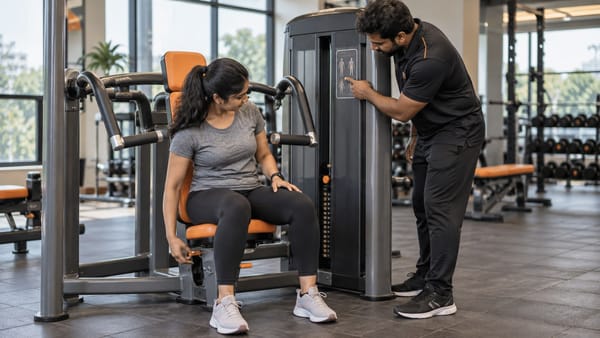
During orientation, ask how to check in, where to keep belongings and how to get help with the equipment you will use. Note any seat or machine settings after instruction. The first-day guide covers what to carry and ask.
For exercise technique, Mayo Clinic advises learning correct form, using controlled movement and allowing recovery between sessions for the same muscles. An unfamiliar machine is a reason to seek instruction, not to guess a setting from someone else's workout.
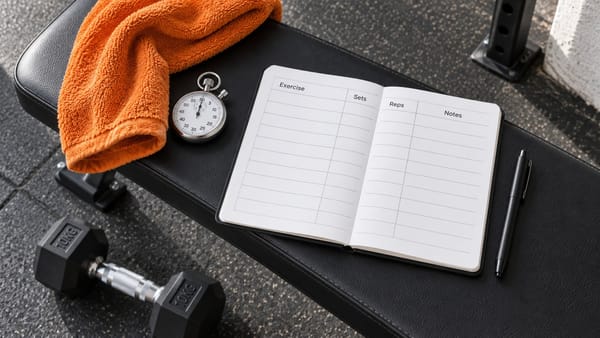
Keep a short, useful record
- Attendance: planned visit, completed visit and reason for any change.
- Workout notes: exercises and settings from your actual plan, plus questions for the next session.
- Experience: energy, discomfort, equipment queues and whether help was available.
- Logistics: travel and changing time, opening-hour problems and any extra cost.
The record is information, not a daily pass-or-fail score. It can show whether missed sessions come from a timing problem, an unclear plan or something that needs professional attention.
Separate rescheduling from recovery
If a meeting replaces a visit, choose another practical appointment without doubling the next workout to compensate. If illness, injury or concerning symptoms interrupt activity, a rescheduling rule does not establish that you are ready to return. There is no 48-hour restart deadline.
Stop an exercise that causes pain. Seek appropriate medical advice for persistent or worsening symptoms. Muscle pain much more severe than expected, marked weakness or tea- or cola-coloured urine calls for immediate medical attention, not a catch-up session; see CDC guidance on rhabdomyolysis warning signs.
Decide what to keep for month two
Ask which time and route worked, whether the gym provided the help you expected and which parts of your exercise plan you understand. You may need the same routine, a different appointment time or more instruction, not a larger purchase or harder workout.
If you are comparing venues, use the Fit Square app. Its packs start at 30 prepaid sessions, with no standalone single-session purchase; unused sessions never expire. Review the upfront cost and monthly-plan versus session-pack tradeoff against actual attendance.