
Can You Use Running Shoes for Gym Workouts? Cardio and Lifting Compared
A running shoe can suit running without being the best answer for every gym task. Assess your planned activities, fit, grip and stability before deciding whether to keep your existing pair, ask for advice or buy a different type.
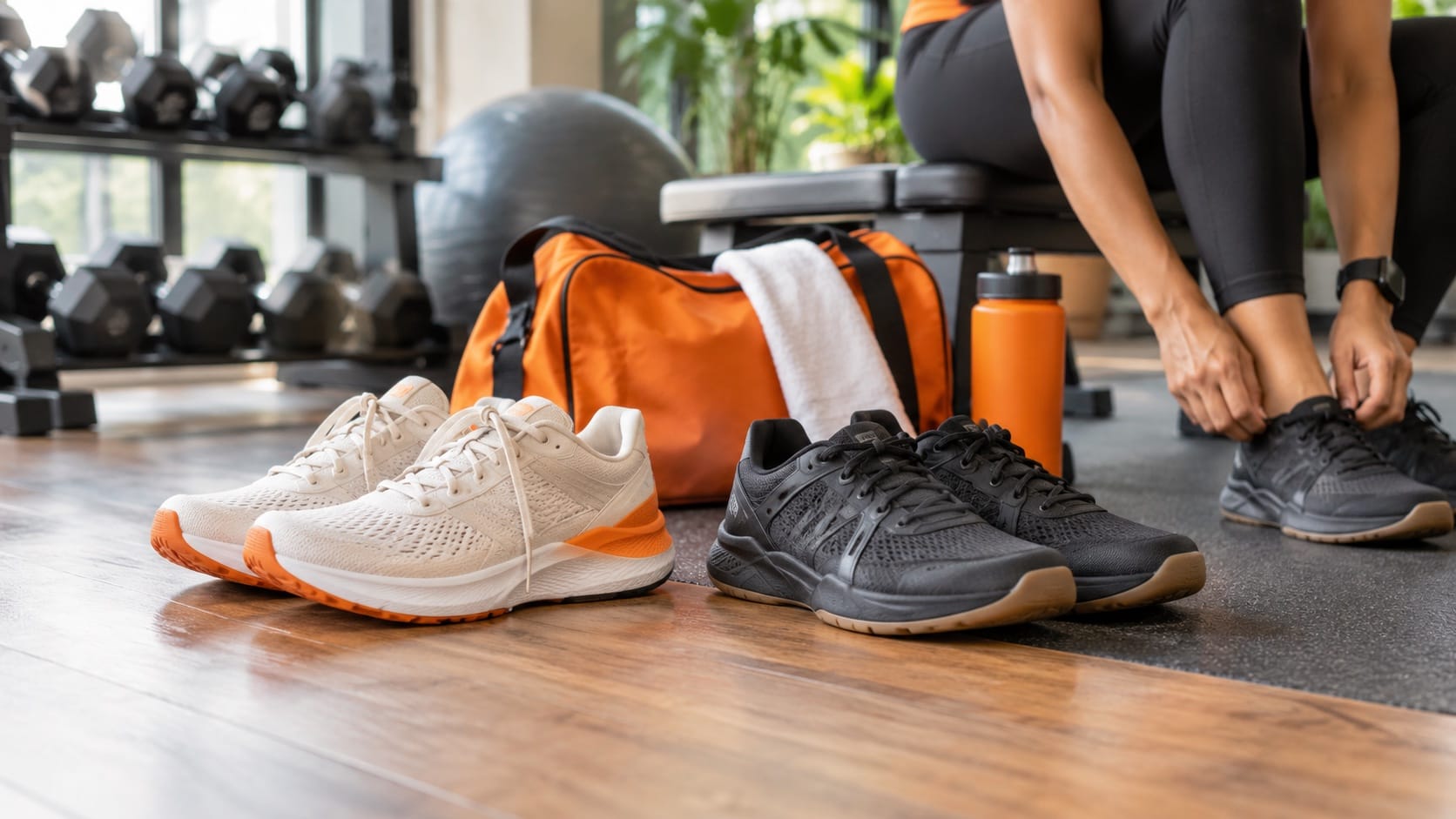
You may be able to use running shoes for parts of a gym workout, especially running on a treadmill. Whether they are suitable for the rest depends on the shoe, the activities, your fit and the venue's rules. A gym visit is a location, not one type of movement.
Do not replace a comfortable pair simply because someone says all running shoes are wrong for the gym. Equally, do not assume a pair designed for running is appropriate for every lift, class or sideways movement. Start with the tasks in your actual plan, then check the footwear with an instructor when you are unsure.
Look at the workout before looking at the shoe label
A visit might be an orientation, treadmill running followed by machines, or a resistance session with no running. Those visits do not require exactly the same footwear decision. Ask the instructor what is planned for your first appointment.
MedlinePlus separates running footwear from strength-training footwear: running shoes are described around forward strides and cushioning, while training shoes are described around support and a less bulky rubber sole. This is a category distinction, not a verdict on every pair sold under either label.
For the rest of the outfit, see what to wear on your first visit. Clothing and shoes should help you attend comfortably; neither needs to be a way of signalling that you are already an experienced athlete.
Why running and lifting raise different questions
When running, you repeat forward strides and care about comfort over repeated impacts. When standing for a resistance exercise, you may care more about how securely the foot sits, how the sole contacts the floor and whether the shoe feels steady under the task.
Some running shoes have thick cushioning or a curved sole. Those features may feel comfortable while running but different when you stand, change direction or learn a resistance movement. Other running shoes may feel less bulky. The label alone does not tell you how your particular pair behaves.
AAOS's athletic-shoe guide explains that shoes are designed for different activities and discusses cross-training separately from running. Use that distinction to ask better questions, not to diagnose your foot type from a photograph or choose a product solely by a marketing category.
A task-by-task comparison
| Planned activity | Main footwear questions | Useful next step |
|---|---|---|
| Treadmill running | Does the pair fit comfortably for running, with no rubbing or heel slipping? | Check fit and your usual running needs rather than switching automatically |
| Easy walking during an orientation | Can you walk comfortably, and does the venue accept the sole? | Ask staff whether your existing pair suits the appointment |
| Seated resistance machines | Is your foot secure where it contacts the floor or foot platform? | Ask the instructor to assess footwear with that machine's setup |
| Standing resistance exercises | Does the pair feel steady for the demonstrated task? | Seek observed instruction before adding resistance |
| A class with direction changes | Does the footwear suit that class, its surface and sideways movement? | Ask the class instructor for requirements before attending |
| A mixed session | Which activity is the priority, and is a change of shoes useful? | Discuss one practical pair or separate footwear without assuming either is essential |
A comfortable fit is necessary, but not the whole decision. A shoe can feel fine while seated and still feel awkward during a particular movement. Test the relevant ordinary movements without heavy resistance; do not use a maximum lift to find out whether the shoe is stable.
Check your existing pair before buying anything
Wear the socks you plan to use. Fasten both shoes, walk around and notice whether your heel slips, your toes feel cramped or one side rubs. Inspect the sole for damage, uneven wear or material that could be slippery on the gym surface.
AAOS's fitting guidance highlights heel security and space for the toes. Rather than treating a printed size as definitive, assess the actual pair on both feet. A shoe that once fitted well may no longer be comfortable, and a different model in the same size can fit differently.
Tell the instructor if the sole rocks, compresses noticeably or makes you feel unsteady during the task they demonstrate. That observation is useful feedback; it is not a self-diagnosis or proof that the shoe will cause an injury. The exercise may also need a different setup or more instruction.
The first-time machine guide explains why equipment adjustments need attention. A shoe change is not a substitute for learning the correct setup on the specific model.
When a training shoe may be worth discussing
If most of your gym activity is resistance work or mixed movement, a training-oriented shoe may be a sensible category to try. Ask what matters for your programme: floor contact, secure fit, suitable grip and comfort through the actual tasks.
Cross-training shoes aim to accommodate more than one activity, but that does not mean every pair is appropriate for all running distances or all exercises. Do not assume a stiffer shoe is automatically better, or that the shoe with the widest sole will fit your foot.
Specialised lifting footwear is a separate purchase decision. A beginner does not need to buy it merely to enter the weights area. If a coach recommends it for a particular task, ask why, how it changes the setup and whether you have a workable alternative.
Keep shoe spending separate from the cost of access and coaching. The beginner gym-budget guide can help you avoid turning a first visit into a large equipment purchase.
What if you run and lift in the same visit?
Tell the instructor which part matters most and what shoes you already own. One acceptable pair may be practical for your current programme; alternatively, changing footwear between sections may be useful. Neither answer should be automatic without knowing the tasks.
Ask where a second pair can be stored and whether indoor-only footwear is required. Allow time for the change instead of rushing between equipment. If you change shoes, recheck the fit and ask whether the next exercise's setup needs any adjustment.
For the training-order question, use cardio before or after weights. Footwear suitability and workout order are related practical considerations, but one does not answer the other.
Do not use barefoot advice or foot labels as shortcuts
Removing shoes is not a universal solution to an awkward pair. Venue rules, floor conditions, the planned activity and individual circumstances still matter. Ask the instructor rather than copying another member who trains without shoes.
If you have prescribed footwear or orthoses, persistent pain, numbness or balance concerns, get appropriate professional advice before replacing them or changing how you exercise. AAOS's shoe-fit guidance specifically cautions that rocker soles are not appropriate for everyone with balance difficulties.
Stop an activity that causes pain and seek appropriate assessment for ongoing symptoms. An online shoe chart cannot establish the cause or prescribe treatment. Likewise, no shoe can guarantee injury-free training.
Make the purchase decision after the orientation
Compare venues in the Fit Square gym directory and confirm the chosen gym's footwear rules. Use the Fit Square app to check eligible access. The gym instructor, not an access listing, is the person to ask about the footwear needs of your programme.
If the existing pair works for the planned appointment, keep the first visit simple. If it does not, identify the actual problem before shopping. A clear reason for a purchase is more useful than buying a second pair because gym footwear sounds like a compulsory category.
Sources
- MedlinePlus: activity-specific footwear.
- AAOS: athletic-shoe categories and fit.
- AAOS: shoe fit and design considerations.
Questions about running shoes in the gym
Can I wear running shoes on a treadmill?
They may be appropriate for running if they suit you, fit well and meet the venue's rules.
Are all running shoes unsuitable for lifting?
No blanket conclusion is justified. Assess the particular pair, exercise and setup with an instructor.
Do beginners need two pairs of gym shoes?
Not automatically. Identify your activities and any actual fit or stability problem first.
Should I remove my shoes for weights?
Do not treat that as a universal fix. Check the venue's rules and get guidance appropriate to the task and your circumstances.