How Long After Eating Should You Work Out?
Use general 3-4-hour large-meal and 1-3-hour small-meal ranges, with practical examples, individual tolerance and clear advice to stop for symptoms.
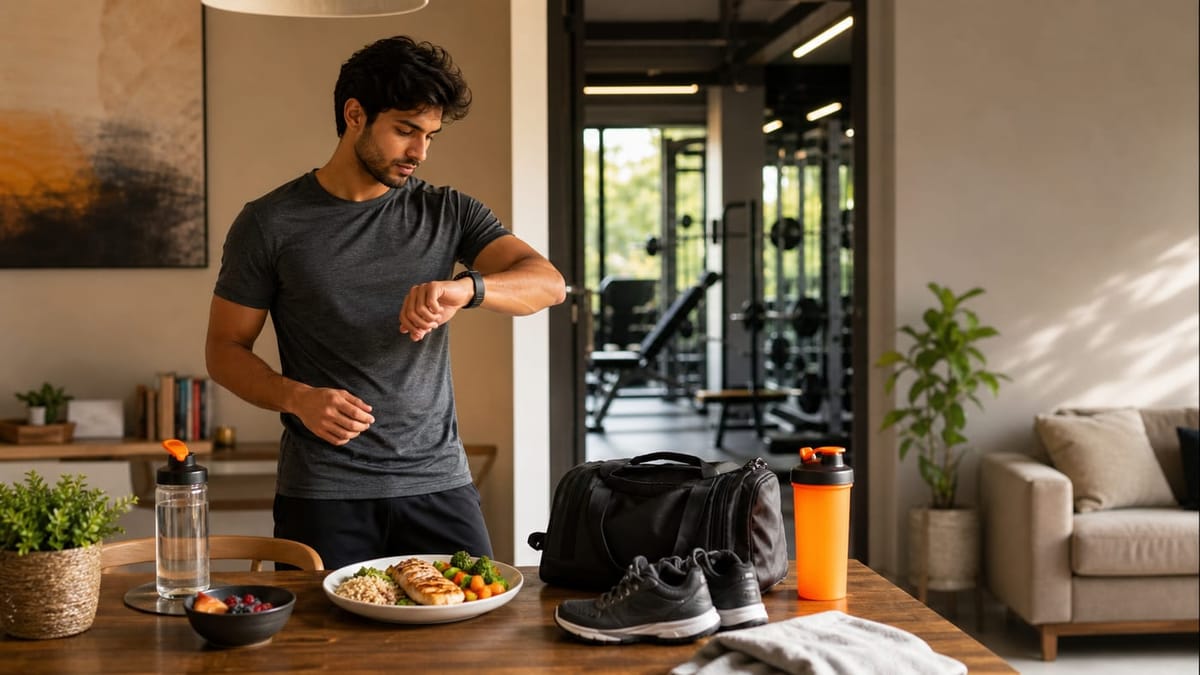
As a general starting guide, allow about 3-4 hours after a large meal and 1-3 hours after a small meal or snack before a workout. These are Mayo Clinic's general timing ranges, not clearance to exercise regardless of symptoms. Some people tolerate a very small snack closer to activity; meal size, workout intensity and individual comfort matter.
A large lunch before a demanding session is different from a little fruit before light activity. This article is general adult education, not an individualized diet or exercise prescription.
Choose the gap by meal size
| What you ate | General starting gap | How to apply it |
|---|---|---|
| Large meal | About 3-4 hours | A substantial thali or large mixed meal belongs here, not in the snack category. |
| Small meal or snack | About 1-3 hours | Consider actual portion size, rather than assuming every sandwich or plate of poha is small. |
| Very small snack | May be tolerated closer to exercise | No fixed short interval suits everyone. Avoid experimenting before a demanding session. |
| Gentle post-meal movement | Comfort-led rather than the same rule as a hard workout | An easy stroll is a different decision from running, jumping or strenuous lifting. |
Sports Dietitians Australia's pre-exercise factsheet gives a 2-4-hour main-meal range and stresses tolerance. Different ranges reflect different meals and contexts, not a precise countdown. Extra fat, fibre or a large portion can affect comfort close to exercise.
Three illustrative schedules
- Large lunch at 1 pm: a workout around 4-5 pm follows the general large-meal window. If you still feel uncomfortable, postpone or reconsider the session.
- Small meal at 5 pm: a 7 pm workout allows a two-hour gap. The clock alone does not guarantee that your particular meal will sit well.
- Early morning with little time: a familiar small snack may be more practical than a large breakfast immediately before exercise; arrange breakfast and the workout so you are not rushing either.
These are invented planning examples, not actual client routines or instructions for everyone. For specific foods, use the Indian pre-workout food guide. For a gentle evening option, read about walking after dinner.
Adjust one practical detail
If a particular arrangement repeatedly feels awkward, note the meal, approximate portion, gap and activity. You might move the session before dinner, eat the main meal earlier or allow a longer gap. Do not skip necessary meals simply because the gym slot is inconvenient.
You can drink water with meals. Avoid treating water timing as a substitute for considering the size of the meal itself.
What if you feel dizzy, faint or nauseated?
Stop exercising and sit or lie down safely if you feel dizzy or faint. Tell someone nearby. Do not just reduce the weight and continue, and do not assume hunger is the cause. NHS guidance advises assessment when dizziness persists or keeps returning.
Fainting during exercise, chest pain or serious breathing difficulty requires emergency help. See the NHS fainting guidance. Persistent vomiting, severe abdominal pain or recurrent digestive problems also need medical assessment rather than another timing experiment.
If you have diabetes, a digestive disorder, pregnancy-related needs or medicines that affect blood glucose, use advice from your clinician or dietitian. A general timing table cannot replace that plan.
When meals and travel keep clashing, compare gym locations and opening hours in the Fit Square directory and app. Build the journey around a workable eating schedule rather than forcing the workout through discomfort.