Shared Gym Membership: Friends and Family Guide
Sharing means you plus one additional person on an eligible 90- or 180-session pack. See a two-person balance example and the questions to settle before buying.
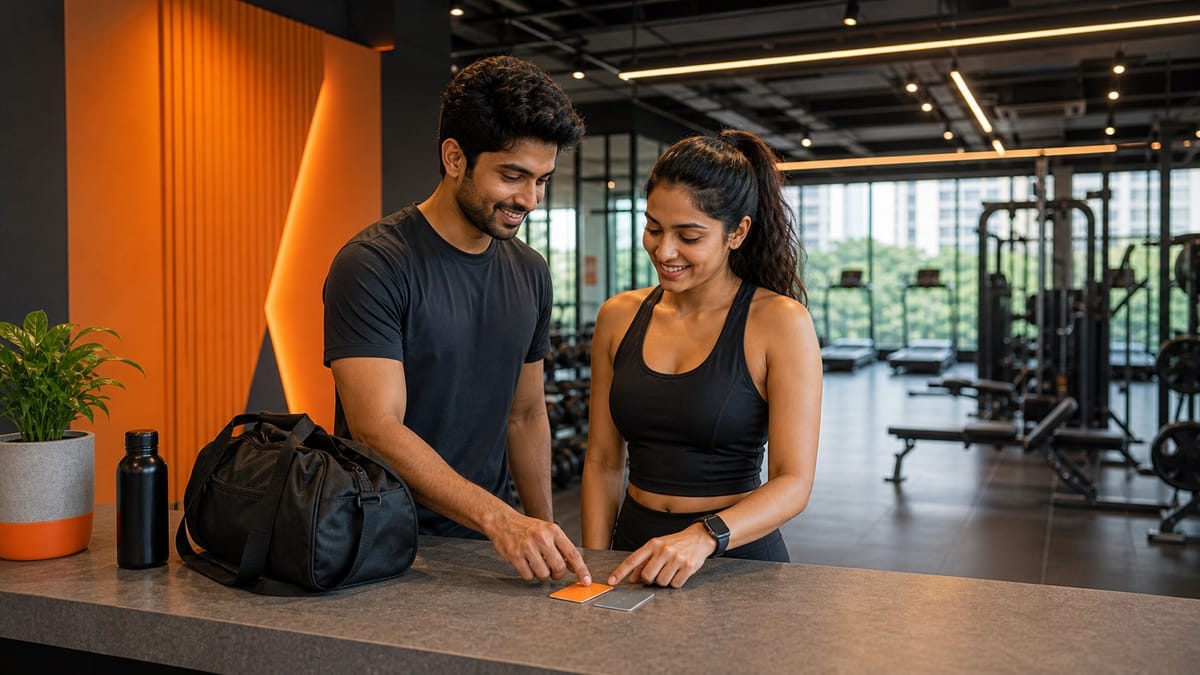
Fit Square sharing is for two people total: the pack holder and one additional person on an eligible 90- or 180-session pack. Both use the same purchased session pool. It is not a membership for an unlimited group of friends or family members.
Sharing can be practical when both people have useful eligible gyms and agree on the upfront purchase. Different attendance patterns are fine to discuss; the important point is understanding how each person's visits affect the same balance.
What an eligible shared pack includes
| Question | Fit Square sharing model |
|---|---|
| How many people? | Two total: you plus one additional person |
| Which pack sizes? | Eligible packs of 90 or 180 sessions; 30 and 60 are not sharing packs |
| What is shared? | One purchased pool of sessions, not a separate full pack for each person |
| How are sessions used? | Each person's completed gym visit consumes one session |
| Do unused sessions expire? | No |
| Which gyms? | Eligible venues under the selected Basic, Premium or Elite category |
The official sharing page sets out the eligible pack and tier choices. Sharing is not a reason to assume that every account, offer or service can be used by another person outside the supported sharing flow.
A two-person balance example
Illustrative example, not actual customer data: two people choose an eligible 90-session pack. Person A completes 12 visits and Person B completes eight. Together they use 20 sessions, leaving 70. The purchase is not 90 sessions for each person.
| Item | Sessions |
|---|---|
| Starting shared pool | 90 |
| Person A's completed visits | 12 used |
| Person B's completed visits | 8 used |
| Remaining shared pool | 70 |
If both people each complete a workout, that is two visits and two sessions, not one joint visit. The example explains deduction only; it does not establish rules about simultaneous check-ins or changing the nominated person.
Choose the tier for both people's actual gyms
Each person should make a shortlist near their own home, office or regular route. Basic covers Basic gyms; Premium covers Premium and Basic; Elite covers all three categories. Compare the access-tier guide before assuming a lower tier will cover both shortlists.
Do not select Elite just because you are sharing. It matters only if the extra eligible venues are useful. Confirm each gym's current category and whether a necessary service costs extra; personal training and classes are not automatically included.
Agree on spending without imposing equal attendance
- Decide who the two users will be and which gyms each expects to use.
- Discuss how you will split the actual upfront payment.
- Estimate each person's likely visits without making an attendance promise.
- Review actual session use before another purchase.
A 50:50 payment split is a personal arrangement, not a Fit Square requirement stated here. If one person expects to use most visits, discuss that beforehand. Neither person should feel pressured to exercise just to make the arithmetic look even.
Questions to settle before purchase
If you need to train together, visit at the same time in different gyms or replace the additional person later, confirm the current supported rules in the app or with support. This guide does not assume those permissions or restrictions. Do not lend login credentials as a substitute for adding the second person through the supported process.
Also confirm current checkout totals and any applicable sharing terms. Sharing should not be presented as automatically cheaper than two other plans: compare actual costs, eligible venues and the amount both people can afford to commit.
When a smaller individual pack may be simpler
If only one person is likely to train or the second person has no suitable eligible venue, a larger shared purchase may not solve the problem. Fit Square individual packs start at 30 prepaid sessions, not a standalone one-visit pass. For balance questions after a break, read the no-expiry guide.
Browse gyms for both people in the directory, then check eligible sharing and the final price in the Fit Square app.