
Muscle Soreness After Gym: Should You Work Out Again?
Decide between rest and light activity after soreness, and recognise severe pain, marked weakness or dark urine that needs immediate medical care.
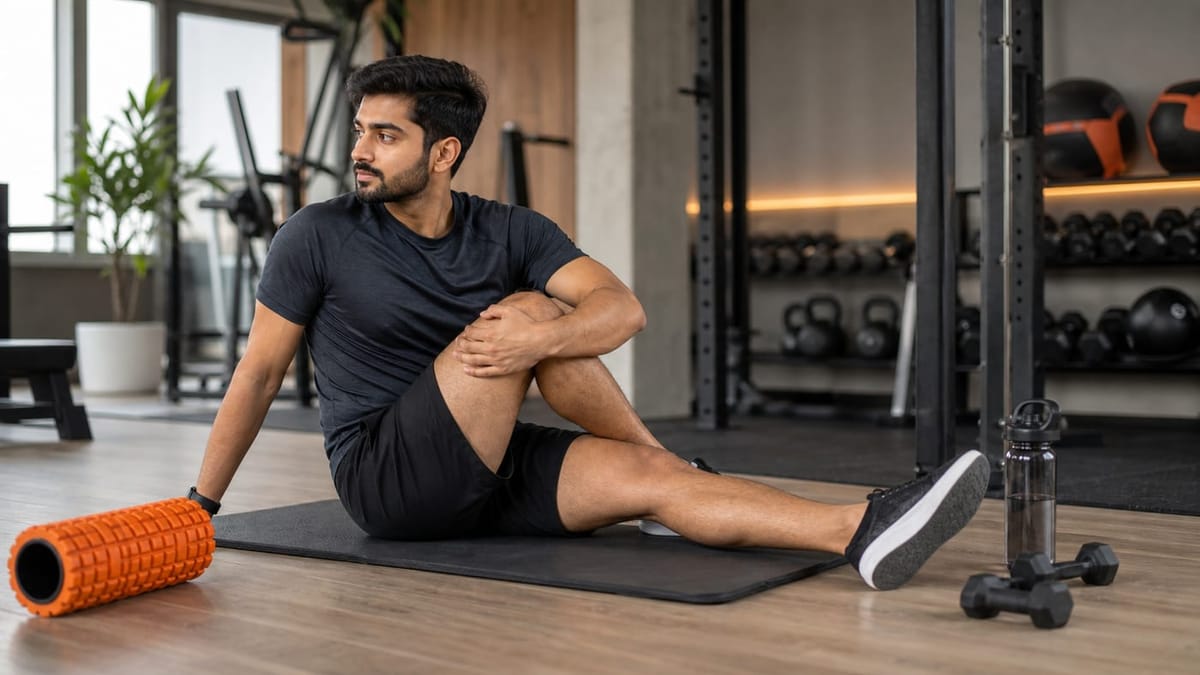
Mild delayed muscle soreness may allow comfortable light activity, but do not repeat hard work on painful muscles. If symptoms alter normal movement, choose rest and reassess. Unexpectedly severe muscle pain, marked weakness or tea/cola-coloured urine requires immediate medical attention. Do not wait for all three signs or try to manage them only by drinking water.
The CDC/NIOSH rhabdomyolysis guidance supports that urgent response. Symptoms alone cannot tell you whether this serious muscle condition is present; a clinician needs to assess you.
Use symptoms, not the next planned visit, to decide
| What you notice | Next action |
|---|---|
| Mild, dull stiffness after unfamiliar activity; ordinary movement remains comfortable | Rest or try comfortable light movement. Stop if it worsens. Avoid hard work on the sore muscles. |
| Pain changes walking, lifting or normal movement; sharp pain or persistent joint pain | Stop the provoking exercise and seek clinical assessment, especially if function is limited or symptoms worsen. |
| Any urgent muscle warning sign listed above | Seek medical care immediately. Do not wait for another symptom or the next day. |
| Chest pain, collapse, fainting during exercise or severe breathing difficulty | Get emergency help immediately. |
This is a guide to action, not a way to diagnose soreness or rule out an injury. NHS guidance identifies fainting while exercising as an emergency, not ordinary tiredness.
What ordinary delayed soreness can look like
Cleveland Clinic describes delayed-onset muscle soreness, or DOMS, as appearing after unfamiliar or intense exercise, often one to three days later, and usually easing over a few days. A productive workout does not require soreness. Timing alone does not prove discomfort is harmless.
Pain that begins suddenly during a repetition is a different reason to stop. Do not use a next-day soreness label to explain pain that started while you were lifting.
Can you train a different area?
For mild soreness only, Cleveland Clinic's exercise advice allows considering a lighter session, while advising against strenuous activity when soreness makes normal exercises difficult. Rest remains an acceptable choice.
Illustrative decision: after a leg workout, a comfortable short walk may be an option if your gait is normal and there are no warning signs. An upper-body exercise is not automatically suitable if getting into position or bracing still hurts your legs. Stop the activity if it aggravates symptoms; there is no requirement to salvage the gym visit.
Before the next harder session
- Note which movements were unfamiliar and how much work you completed.
- Discuss a more manageable session with a qualified trainer if the first session overwhelmed you.
- Do not add several new exercises, loads and sets at once simply because soreness has eased.
- Keep room for meals, sleep and recovery rather than seeking a product that promises to erase soreness.
If pain is not improving, lasts around a week, repeatedly follows ordinary sessions, or comes with swelling or limited function, arrange medical assessment sooner rather than repeatedly modifying the workout yourself. Severe or rapidly worsening symptoms need urgent care, not that waiting period.
Do not let access pressure make the decision
The first-day guide and frequency guide can help with a future routine once activity is appropriate. They are not substitutes for care when warning signs are present.
If you already have Fit Square sessions, they never expire; you do not need to use them while unwell. When you are ready to plan a return, check familiar venues in the directory or app. Getting assessed or resting takes priority over any gym visit.