
Leg Press for Beginners: Seat Position, Movement and Machine Differences
Leg presses differ in what moves, how the seat adjusts, and how the exercise begins and ends. Use real manufacturer examples and public exercise instructions to prepare for a checked setup instead of copying another person's foot position, depth or plate count.
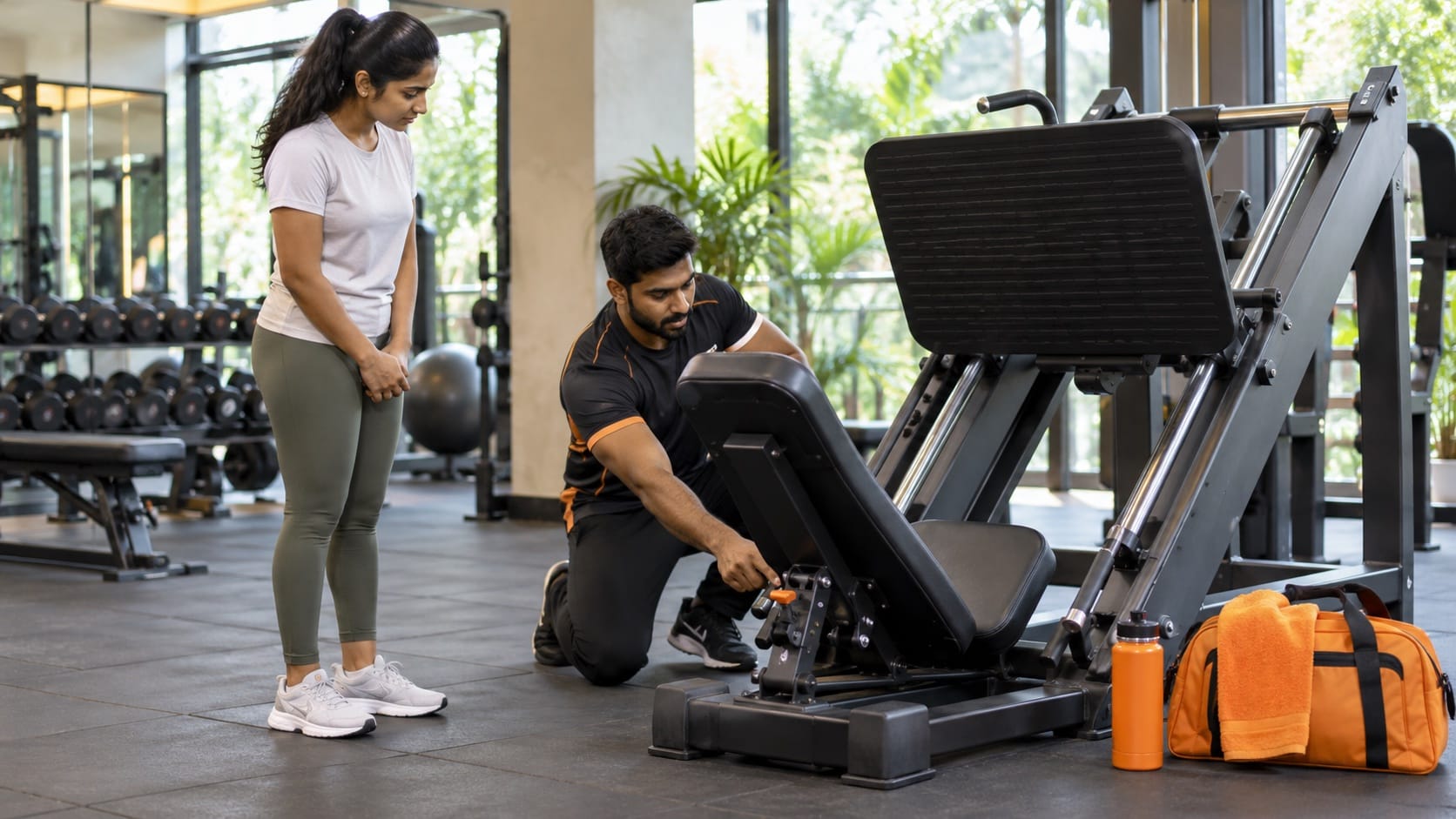
There is no single seat setting, foot placement or starting weight for every leg press. First identify the machine, learn its adjustments and stopping procedure, and have the intended starting position checked for you. A seated selectorised machine, a linear plate-loaded press and an arcing press are not one interchangeable setup.
Use this setup checklist alongside the first-time machine overview and the instructions for your exact model. Individual instruction is needed to check fit, usable range and the starting and finishing procedure.
Identify what moves before moving it
Look at the machine's nameplate and instructions with staff. Ask which part travels during the exercise: a footplate or sled, a seat carriage, or another linkage. Identify the controls that change fit separately from anything used to release or stop the resistance.
| Example | Verified difference | Question before use |
|---|---|---|
| Life Fitness Plate Loaded Linear Leg Press | The manufacturer lists three back-pad support adjustments. | Which back-pad position is appropriate, and what is the start/end procedure? |
| Life Fitness Insignia Arc Leg Press SS-LP | The manufacturer describes an arcing path and an adjustable seat carriage. | How do I set and lock the carriage on this model? |
| Conventional seated selectorised example | ACE's reference describes a supported seated press against a resistance plate. | Does this reference match our machine? |
Compare the actual linear-press product page with the SS-LP arcing-press page. Match those designs to the model on your gym's nameplate before deciding which controls apply.
Check the support controls separately
| Control or feature | What to identify | What needs checking before movement |
|---|---|---|
| Back-pad adjustment on the named linear press | The manufacturer lists three support positions. | Which position is intended for your setup, and whether it is locked. |
| Seat carriage on the SS-LP | The carriage adjusts the seated starting position. | How the carriage is adjusted and secured on that model. |
| SS-LP depth-assist handle | A separate feature from resistance selection. | Its intended use and how it relates to the starting position. |
| Selector or plate-loading system | The approved way to select resistance. | Resistance is resting before changes and the supplied parts are correctly engaged. |
Seat distance and back-pad angle change different aspects of the setup. One comfortable adjustment does not establish that the platform reach and support are also appropriate. Check them together in the intended starting position.
A depth-assist handle is not a target to select the deepest possible position. Identify its operation from the matching instructions before using it; do not treat it as a resistance control or copy another machine's handle sequence.
Use the conventional seated demonstration as a checklist
ACE's official seated leg-press reference illustrates a supported seated version. Compare these checkpoints with that version rather than applying its starting angle or foot position to every sled:
- Supported start: identify the back and pelvic support, the foot platform and the intended handles. Check that the seated position can be obtained without crowding the thighs into the torso.
- Platform contact: the reference keeps the heels in contact. If the attempted movement loses that contact, stop and have the fit and range checked rather than compensating with a different foot-chart position.
- Controlled press: ACE describes a relaxed extended endpoint, not forced knee hyperextension. Do not turn that distinction into a rule that the legs must remain deeply bent throughout.
- Controlled return: the reference warns against lifting the pelvis from the pad or compressing the thighs against the ribcage. More travel is not useful if the checked support is lost.
Keep the support, not somebody else's depth. Have the usable range checked on your actual machine; a seated stack example is not a demonstration of the linear carriage release or the SS-LP depth-assist system.
Identify the secure start and finish before loading
The linked Life Fitness linear-press page names a flip-in, flip-out carriage release. The SS-LP page names a carriage adjustment and depth-assist handle. Those features identify different operating questions; do not substitute one procedure for the other.
- Find the operating control: distinguish the support adjustment from anything used to release or secure the moving resistance.
- Recognise a secure finish: know the position in which the resistance is resting and the mechanism is engaged before leaving the machine.
- Check how to stop early: obtain the model's procedure before attempting a set, rather than discovering it when tired.
- Keep adjustment separate from movement: do not remove plates, change pins or move support controls while the resistance is moving or suspended.
The Optima manufacturer safety instructions warn against suspended-stack pin changes and freeing jammed parts. Use the matching operating manual for the linear or arcing press; this legacy manual does not supply their release sequences.
Foot-placement charts cannot choose your setup
A diagram promising a different body shape from moving the feet a little higher or wider is not a reliable first-visit operating guide. It also leaves out the machine's platform, travel path, support adjustments and your ability to maintain the taught position.
Ask instead: 'Where should I begin on this model?', 'What contact should remain during the movement?', and 'What shows that the position needs checking?' The answers should be demonstrated on the equipment, not inferred from a universal platform graphic.
If a foot position or movement causes pain, stop. Do not keep testing placements as rehabilitation or assume the machine is correcting you. Persistent or recurring pain belongs with an appropriate healthcare professional, not a different internet chart.
Do not compare plate counts across machines
Record resistance with the machine identity and unit. A plate count alone leaves out which equipment you used and what its instructions say. A stack number on a different press is not a progression target just because the labels share kilograms.
The starting-weight guide discusses how to establish a controllable load. A useful first practice attempt is one in which you can understand the operation and follow the checked movement, not one selected to match another person.
If your plan uses the same machine regularly, record the confirmed support settings along with the resistance and completed work. The first-month progress guide helps organise those notes. At a new gym, repeat orientation rather than treating the previous setting as a transferable prescription.
What to do when something does not fit
For example, if you can reach the platform but cannot settle comfortably against the support, resolve the support and starting position before adding plates. A reachable platform alone does not confirm that the machine accommodates you.
If the trainer cannot establish a suitable setup, ask for an alternative serving the intended lower-body role. That does not require declaring the entire leg-press category unsuitable. It means this task needs a different choice today.
Leave equipment unused if a pad will not lock, a cable or component appears damaged, or the release procedure is unclear. For pain or feeling unwell, stop and get help. NHS advice supports emergency action for sudden persistent chest discomfort or chest pain with breathlessness; do not finish a set before seeking help.
Keep the confirmed setup with the model
Keep the model, confirmed support position and resistance unit together. Include any unresolved release or finish question; a note that only says leg press cannot distinguish the linear carriage from the SS-LP's arcing system.
Check equipment and orientation when comparing Fit Square partner-gym listings and eligible options in the Fit Square app. Gym access and paid personal training are separate services.
Public references
- ACE: seated leg press
- Life Fitness: linear leg press
- Life Fitness: SS-LP arcing press
- Life Fitness: model-specific safety manual
- NHS: chest-pain guidance
Leg-press questions
Is seat distance the same as back-pad angle?
No. Identify what each adjustment changes on your model.
Should every beginner use the same foot placement?
No. Have the position checked against the actual machine and intended exercise.
Can I copy a starting-weight chart?
A universal chart cannot account for machine differences or your control. Establish an appropriate practice setting with help.
Can I learn the release from any leg-press video?
No. The release and finish must match your exact machine's instructions.